
Fehlerjagd: weil/dass im Sport – Verb am Ende!
Fehlerjagd Wortstellung: 4 Sätze mit weil/dass richtig stellen.
 Dannis
Keywords:
Fehlerjagd: Wähle den korrekten Satz mit „weil“.
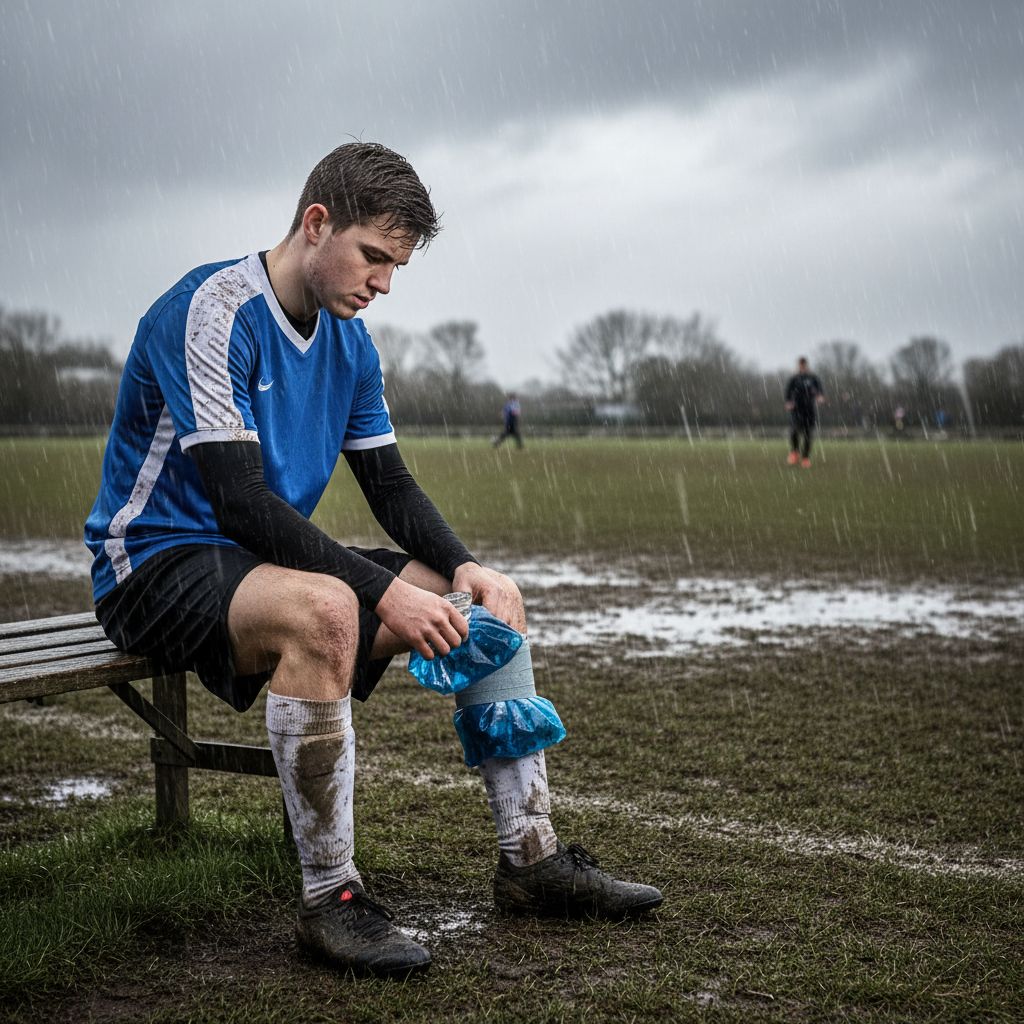
Thema: Verletzung beim Fußball
Correct: 0/8
Hints for this Quiz
Remember: After „weil“, push the verb to the end.
Thema: Verletzung beim Fußball
In a weil-clause, the conjugated verb goes to the end: „..., weil ich verletzt bin.“ Not V2 and not inversion inside the subclause.
After „dass“, keep normal SOV order with the conjugated verb last.
Thema: Traineransage
„dass“ introduces a content clause; the conjugated verb goes to the end of the clause part: „... dass wir morgen früher kommen sollen.“
Perfekt in subclauses: Participle + auxiliary at the end (… trainiert hat).
Thema: Laufen und Training
In the Perfekt at the end of a subclause, the participle comes before the auxiliary, and the auxiliary is final: „... trainiert hat.“
Reported speech/content → „dass“. Reason → „weil“. Both need verb at the end.
Achte auf die Wortstellung im Nebensatz
„sagen“ introduces reported content → use „dass“. „weil“ gives a reason, which doesn’t fit after „sagt“ here.
Push the conjugated verb to the very end of the „dass“-clause.
Die Fans sind glücklich. Die Mannschaft hat gewonnen.
With „dass“, the conjugated verb (here the auxiliary „hat“) goes to the end: „... dass die Mannschaft gewonnen hat.“
Modal + infinitive in subclauses: infinitive + conjugated modal at the end.
Thema: Training am Morgen
With a modal verb in a subclause, the infinitive precedes the modal, and the conjugated modal is final: „... trainieren muss.“
In „weil“-Clauses with Perfekt: participle + auxiliary at the end.
Thema: Spiel fällt aus wegen Regen
Correct subclause word order with Perfekt keeps the auxiliary last: „... geregnet hat.“ The other options break subclause order or split the verbal bracket incorrectly.
Keep Subject → info → conjugated verb at the end after „weil“.
Thema: Kein Trainer heute
Subclause after „weil“ keeps subject–(objects/adverbs)–verb-final: „... weil wir heute keinen Trainer haben.“
Discover next:


Do you like it? Want more?
Free & quick registration, no subscriptions!
🤗
For expats and alike – unlike any other language app you've tried!
🎮
Learn by scrolling and playing!
💪
Real grammar and idioms to sound like locals!
🧠
Endless FYP feed for language learning
🧠
Endless FYP feed for language learning
Related articles
Materials on related topics will help expand your understanding of the topics: