
En la charcutería del súper: quedar/faltar y pedir en el mostrador
Usar 'quedar' y 'faltar' para existencias y rematar pedidos en mostrador.
 Dannis
--:--
--:--
– Perdona, ¿quién es el último?
– Soy yo, pero ya he terminado. Te toca. ¡Hasta luego!
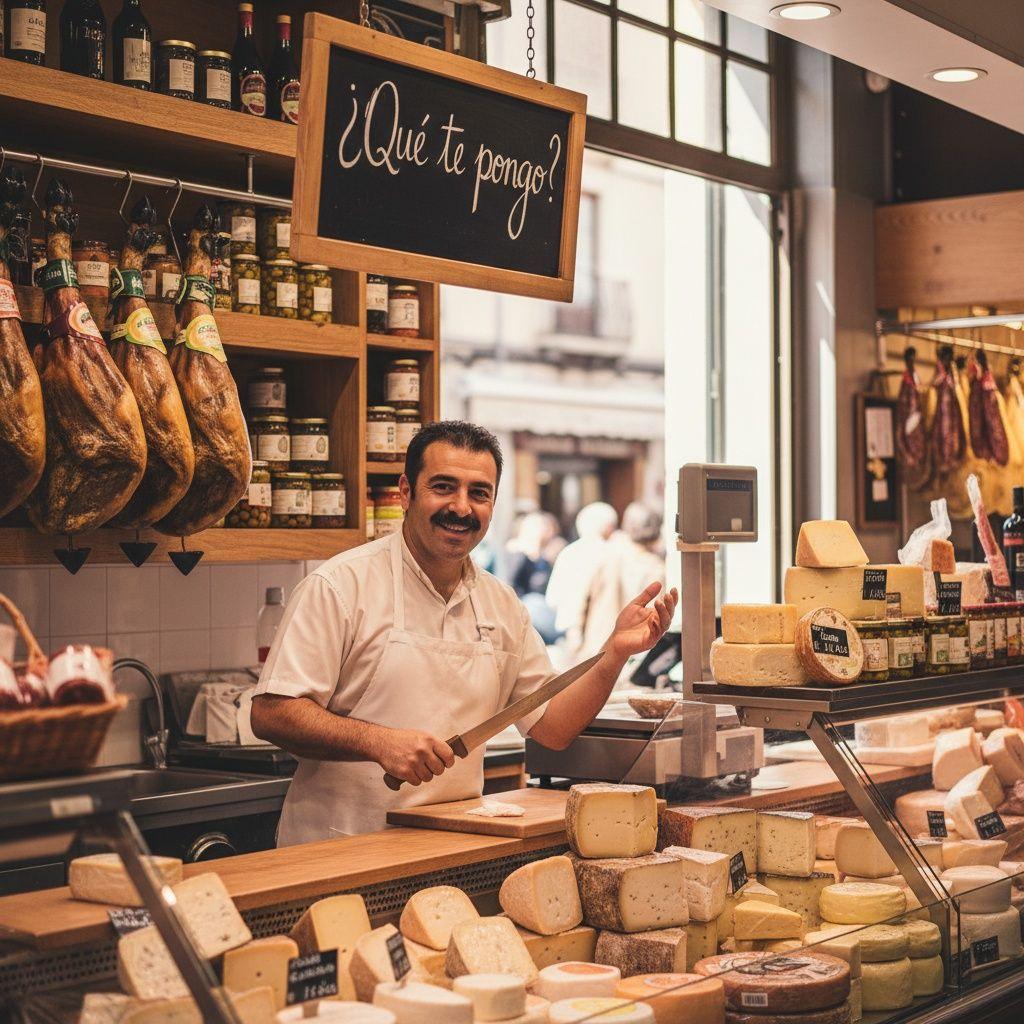
– Hola, buenas. ¿Qué te pongo?
– ¿Me pones doscientos gramos de jamón cocido, finito, por favor?
– Claro. De este nos quedan trescientos gramos; si quieres más, tengo otro parecido.
– Con doscientos vale. ¿Y quedan baguettes? Quiero una para el bocata.
– Quedan dos, pero del pan integral faltan hasta mañana. ¿Te llevas una normal?
– Sí, me llevo una normal. Ah, ¿me pones también media docena de croquetas?
– Perfecto. Hoy han llegado nuevas; están en oferta. ¿Quieres bolsa?
– No, gracias, traigo una reutilizable. ¿Cuánto es?
Comprehension check:
¿Qué se lleva finalmente el cliente?
Fíjate en cantidades (gramos), tipo de pan y producto extra.
200 g de jamón cocido, una baguette normal y croquetas.
300 g de jamón curado, pan integral y croquetas.
200 g de queso, dos baguettes integrales y aceitunas.
He asks for 200 g of jamón cocido, chooses a normal baguette because the integral is unavailable, and adds half a dozen croquettes. In Spain, fresh products are ordered in kilos/grams and bags are commonly charged, which is why the clerk asks about a bag:
Listen for quedar/faltar (stock), the word baguette vs. integral, and the exact weight requested.
¿Por qué dice el dependiente "faltan hasta mañana" sobre el pan integral?
Porque no hay pan integral hasta mañana (está agotado).
Porque hoy es muy caro.
Porque en esa tienda no venden pan integral.
Faltar here signals something is missing/not available; shops also label this as agotado (out of stock). He also says the croquettes are en oferta (on sale), which is typical supermarket language. Additionally, notice hoy + pretérito perfecto in Spain ("Hoy han llegado..."):
Think of faltar as "to be missing/out of stock" in store context.
Completa la frase del dependiente: "¿___ una normal?"
Te llevas
Te pones
Llevas
Me pones
In Peninsular retail talk, dependientes often say ¿Qué te pongo? and ¿Te pongo algo más? Similarly, ¿Te llevas…? is a natural upsell prompt. Me pones is the customer's way to order, not the clerk's. See examples like ¿Qué te doy?/¿Qué te pongo? used at counters:
This is the clerk offering an option, not the customer ordering.
Discover next:

Do you like it? Want more?
Free & quick registration, no subscriptions!
🤗
For expats and alike – unlike any other language app you've tried!
🎮
Learn by scrolling and playing!
💪
Real grammar and idioms to sound like locals!
🧠
Endless FYP feed for language learning
🧠
Endless FYP feed for language learning
Related articles
Materials on related topics will help expand your understanding of the topics: