
Am Schalter höflich sprechen: Mini-Rollenspiele
Mini-Rollenspielkarten: Am Schalter angemessen reagieren – passende höfliche Antwort auswählen.
 Dannis
Keywords:
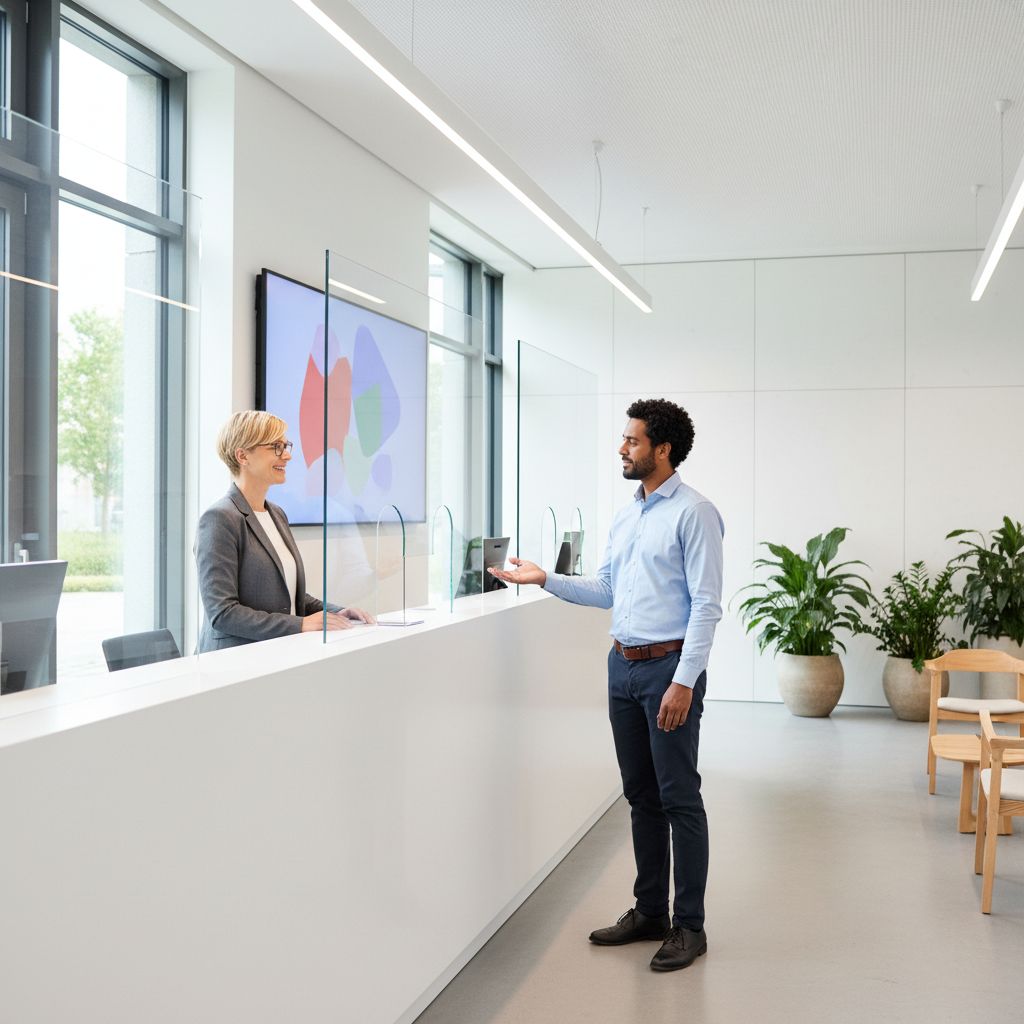
Sie stehen am Schalter und brauchen eine Wartemarke. Welche höfliche Bitte passt am besten?
Mini-Rollenspiel: Bitte um eine Nummer
Correct: 0/8
Hints for this Quiz
Think of a soft request using “Könnten Sie … bitte …?”
Mini-Rollenspiel: Bitte um eine Nummer
Use Könnten Sie + bitte for a polite request at an office counter.
For permission, prefer “Dürfte ich …?”
Höflich um Erlaubnis fragen
Dürfte ich …? asks for permission in a very polite way.
Answer directly and correctly to the yes/no question.
Kurz und passend antworten
The question expects confirmation and presenting the passport: “Ja, hier ist er.”
Look for “Ich wollte fragen, ob … könnten” to soften the request.
Bitte elegant formulieren
Ich wollte fragen, ob … könnten softens the request and is very polite.
After “wenn”, send the conjugated verb to the end; use a polite form like “könnten.”
Konjunktiv II in Nebensätzen
In the wenn-clause, use the polite construction with “könnten” at the end.
Use “Könnten Sie … bitte …?” to sound formal and polite.
Termin am Schalter anfragen
Könnten Sie … bitte …? is the most polite and complete request.
After “ob”, keep subject–object info first and put the verb at the end.
„ob“-Nebensatz im höflichen Fragesatz
In an „ob“-clause, the conjugated verb goes to the end: „… ob Sie … haben.“
Look for a “Wären Sie so freundlich, …?” structure to sound very polite.
Zeit höflich erbitten
Wären Sie so freundlich, …? is a very polite way to ask for time/help.
Discover next:

Do you like it? Want more?
Free & quick registration, no subscriptions!
🤗
For expats and alike – unlike any other language app you've tried!
🎮
Learn by scrolling and playing!
💪
Real grammar and idioms to sound like locals!
🧠
Endless FYP feed for language learning
🧠
Endless FYP feed for language learning
Related articles
Materials on related topics will help expand your understanding of the topics: