
Amtstermin: Adjektive prädikativ vs. attributiv (B1)
Adjektivtraining: prädikativ vs. attributiv im Amt (Endungen in 3 Sätzen ergänzen).
 Dannis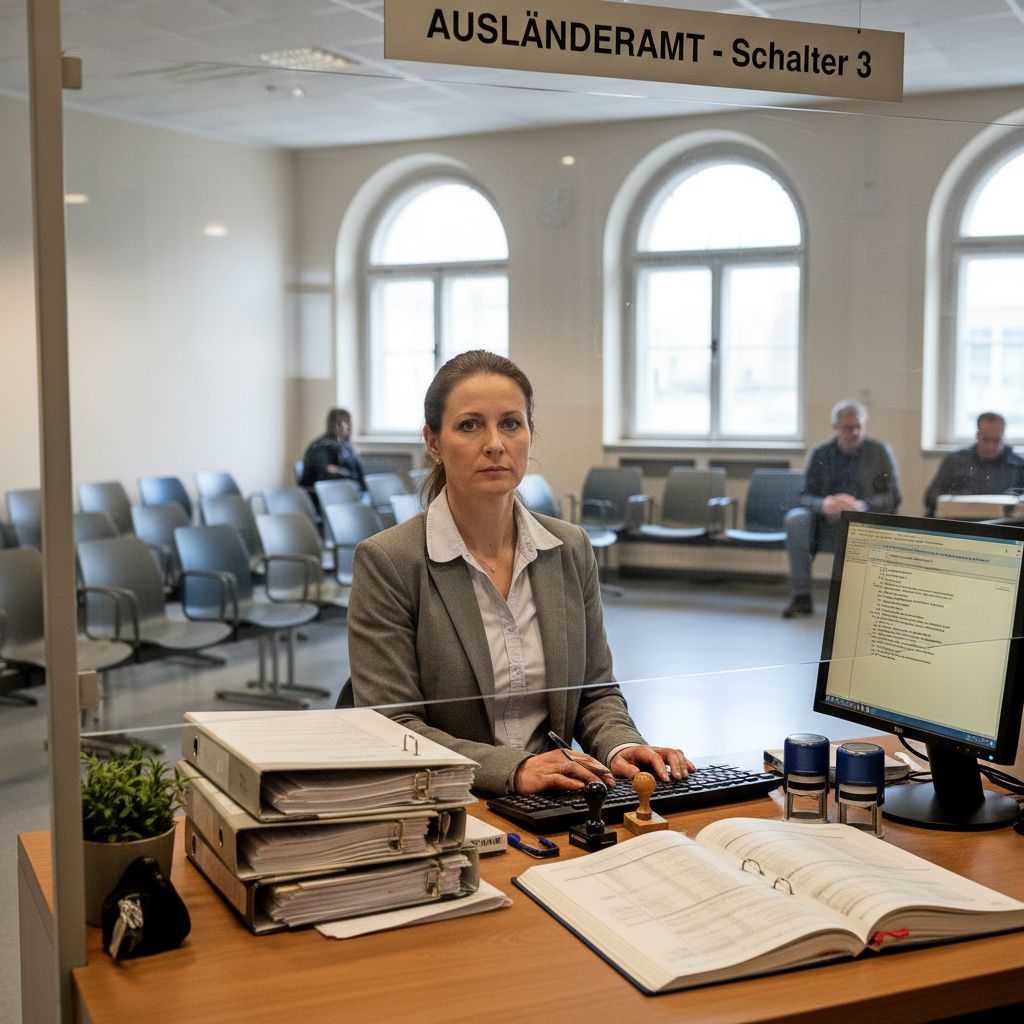
Bitte reichen Sie ___ Unterlagen bis Freitag ein. (vollständig)
Correct: 0/8
Hints for this Quiz
Think “no article + plural”: strong ending -e.
No article + plural accusative uses strong declension: -e → vollständige Unterlagen.
After “sein/werden/bleiben”, adjectives don’t take endings.
Predicative adjective after “sein” has no ending: Der Pass ist gültig.
Feminine accusative with “eine” → -e.
After “eine” (feminine accusative), the adjective ends with -e → eine aktuelle Meldebescheinigung.
With definite articles (der/die/das) in plural, use -en in acc/dat/gen.
Definite article + plural accusative → weak declension: -en → die fehlenden Dokumente.
Check article type (none/eine/definite) and whether the adjective is predicative.
A) No article + plural acc → vollständige. B) Predicative after “sein” → gültig. C) Feminine acc with “eine” → aktuelle.
Unterschrift is feminine; with “eine” in accusative → -e.
Feminine accusative with “eine” → -e: eine fehlende Unterschrift.
Genitive or dative with definite articles usually → -en.
Genitive plural with definite article (“der … Pässe”) → adjective takes -en: der gültigen Pässe.
After “sein”, drop the ending.
Predicative adjective after “sein” → no ending: Die Unterlagen sind vollständig.
Discover next:


Do you like it? Want more?
Free & quick registration, no subscriptions!
🤗
For expats and alike – unlike any other language app you've tried!
🎮
Learn by scrolling and playing!
💪
Real grammar and idioms to sound like locals!
🧠
Endless FYP feed for language learning
🧠
Endless FYP feed for language learning
Related articles
Materials on related topics will help expand your understanding of the topics: