
Animales de granja y sus productos: ¡empareja!
Quiz de emparejar: relaciona cada animal de granja con su producto típico en España.
 Dannis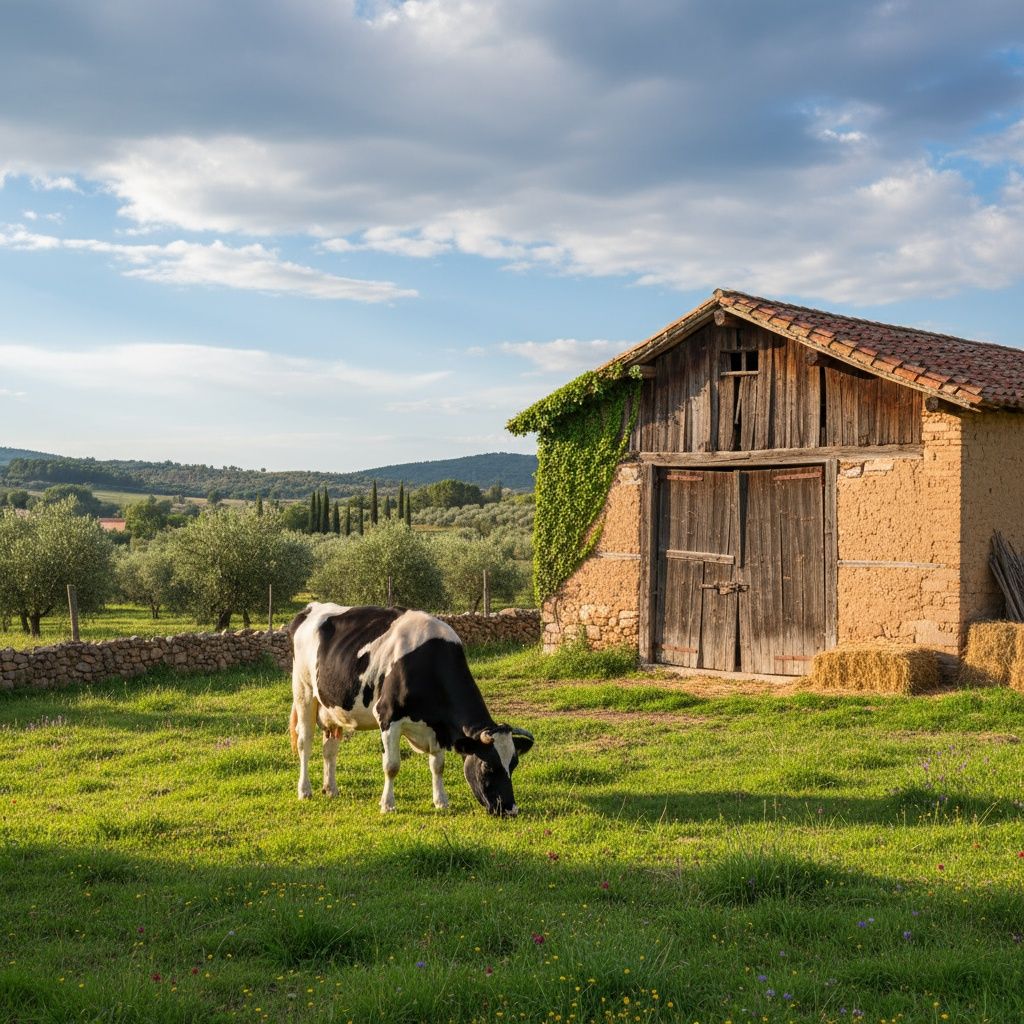
¿Qué producto corresponde a la vaca?
Correct: 0/8
Hints for this Quiz
Think: vaca → leche. The word leche (milk) often appears on packaging.
A cow gives milk. This is a basic pair for vocabulary on the topic “farm” (see the note: “La vaca es fuente de leche”).
Remember the verb “poner” in the fixed expression: la gallina pone… what?
Correct: gallina → huevos. In the text it says that the hen (la gallina) is the one that gives eggs (huevos).
The word lana (wool) often goes together with oveja (sheep).
Correct: oveja → lana. In Spain, merino wool (lana merina) is historically well known. (Yes, sheep also produce milk, but in this topic the “typical product” is wool.)
In Spanish shops, in the deli/charcutería section, you will often see jamón next to chorizo.
Of course, jamón (cured ham) is a pork product, a symbol of Spanish gastronomy.
Look for the pair from the lesson: oveja → lana.
The correct statement is: “La oveja da lana”. This is a classic pair for basic farm vocabulary.
Remember: charcutería (deli / cured-meats counter) and the word cerdo (pig).
Jamón is a product made from pork (del cerdo). The source text highlights the cultural importance of jamón en España.
Think about the word leche. Which animal gives milk on the farm?
It is the vaca (cow): the cow is the source of milk (leche).
The word huevos (eggs) appears often in Spanish breakfast recipes (desayuno).
Correct: gallina → huevos. A hen lays eggs, not milk and not wool.
Discover next:

Do you like it? Want more?
Free & quick registration, no subscriptions!
🤗
For expats and alike – unlike any other language app you've tried!
🎮
Learn by scrolling and playing!
💪
Real grammar and idioms to sound like locals!
🧠
Endless FYP feed for language learning
🧠
Endless FYP feed for language learning
Related articles
Materials on related topics will help expand your understanding of the topics: