Ese “se” que enfatiza: comerse, saberse, creerse
 Dannis
In Spain, the pronoun "se" is often used to intensify the meaning: *comerse, beberse, saberse, creerse*. It marks the idea of totality/involvement (reflexive verbs with "se"). Colloquial pattern: *comerse un marrón*.
COMERSE + noun (colloquial) = to “swallow/put up with” something unpleasant. E.g.: Me he comido un atasco. (Literally “I’ve eaten a traffic jam” = I got stuck in a traffic jam.) Similar pattern: comerse un marrón (“to get stuck with a problem / take the blame”).
SABERSE + noun = to know by heart. E.g.: Me sé las señales de tráfico (“I know the traffic signs by heart”). It’s reflexive: me/te/se...
CREERSE vs. CREER: me lo creo = I accept it as true (emphatic). No me lo creo = “I don’t believe it!” E.g.: Casi me lo creo.
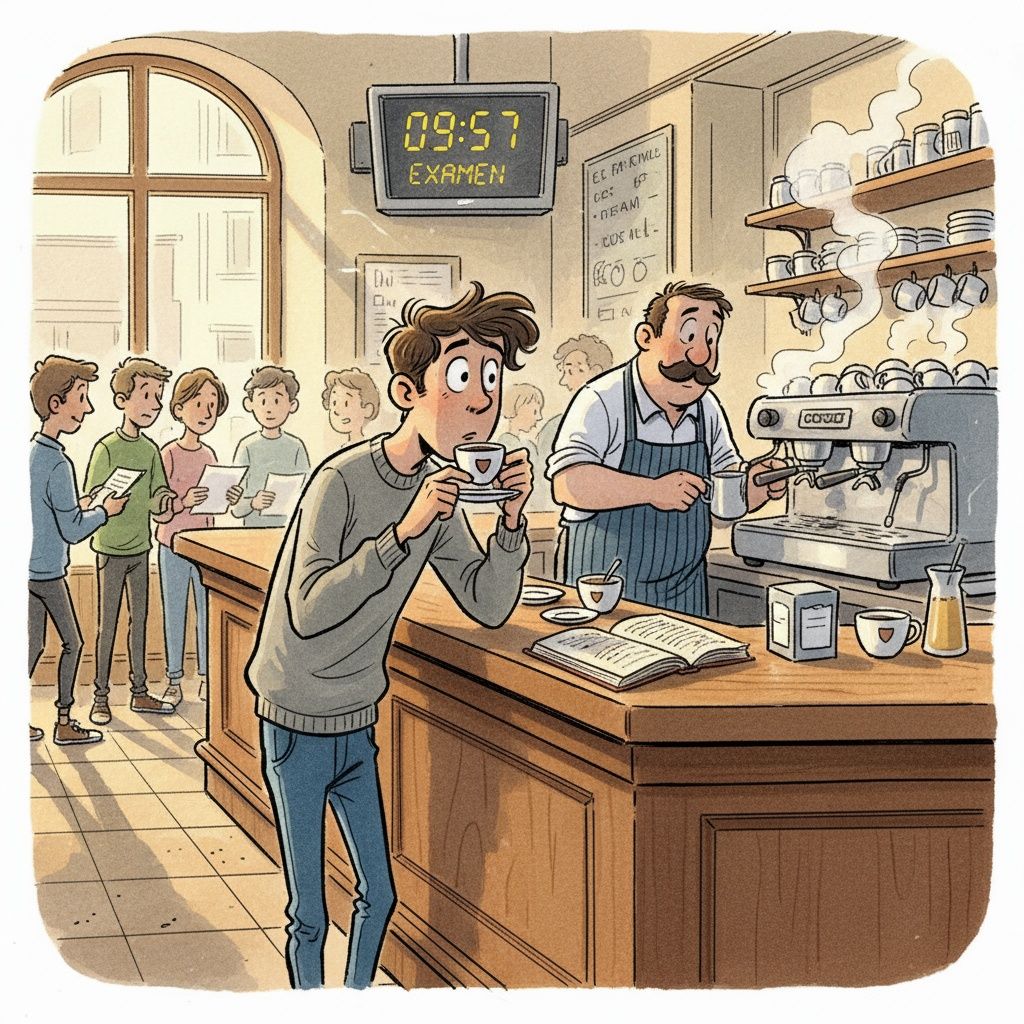
BEBERSE + drink = to drink it all / to drink it quickly. E.g.: Antes del examen, me he bebido un café (I downed a coffee before the exam). Same intensifying pattern as comerse un marrón.
Pronouns: *Me voy a beber un café* / *Voy a bebérmelo.* Imperative: *¡Bébete el café!* In compound tenses: *Me lo he bebido.* Tip: use this pattern when the idea of “the whole thing” or your full involvement is important.
Comprehension check:
Discover next: