
Imperativo de vosotros en la paella: ¡completad la receta!
Imperativo de vosotros en una receta: completa los pasos de una paella.
 Dannis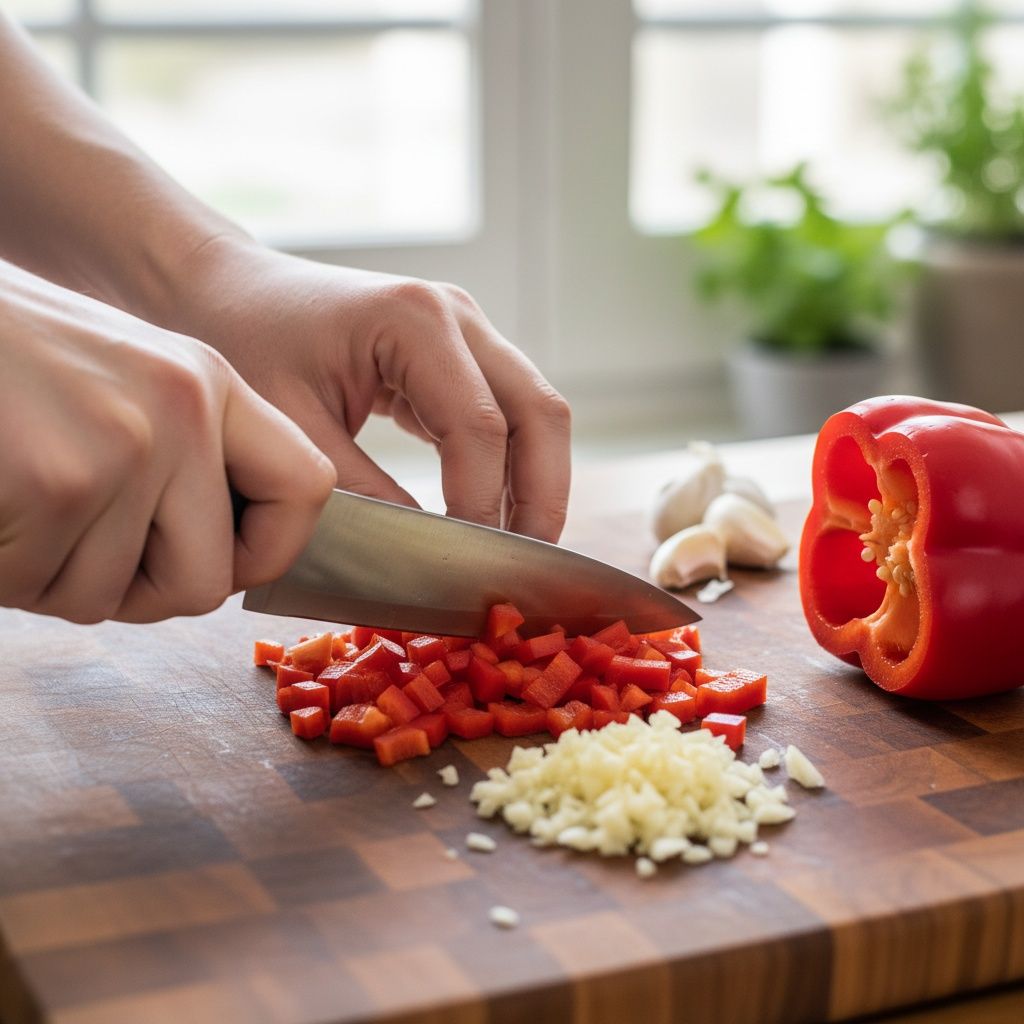
Paso 1: ____ los pimientos y el ajo muy finos.
Correct: 0/7
Hints for this Quiz
Remember: for -ar → ending -ad.
The imperative for "vosotros" is formed from the infinitive by replacing -r with -d: cortar → cortad. "Cortáis" is the Present Indicative, "cortar" is the infinitive, and "cortaos" is a colloquial form, not correct here.
For verbs ending in -er: -r → -d (comed, removed…).
The verb remover (to stir) in the "vosotros" imperative: remover → remove + d → removed. "Removéis" is Indicative, "remover" is the infinitive, and "removiad" is a made‑up form.
For -ar use -ad: echad, probad, cortad…
The correct "vosotros" imperative of echar is echad (type -ar → -ad). The other options are either indicative forms or incorrect spellings.
The "vosotros" imperative is taken from the infinitive: remove -r → add +d.
Probar has a diphthong in the Present (yo pruebo), but the "vosotros" imperative is formed from the infinitive: probar → probad (without diphthong).
In the affirmative imperative, place the pronoun AFTER the verb: ponedle, echadlo…
In affirmative imperatives, pronouns are written after the verb as one word: poned + le → ponedle. The other options are the infinitive, an incorrect combination, or the wrong pronoun.
Reflexives: -d + os → -os (sentaos, lavaos).
With the reflexive pronoun os, the final -d is dropped: lavad + os → lavaos. "Laváis" is Indicative. "Lavaros" is very common in speech, but the standard form for the affirmative imperative is "lavaos".
Remember the order: verb + pronoun with no space (tapadla, retiradlo).
In the affirmative imperative, a direct object pronoun is placed after the verb: tapad + la → tapadla. The other forms are the infinitive, have an error in pronoun/stress, or use the wrong gender.
Discover next:

Do you like it? Want more?
Free & quick registration, no subscriptions!
🤗
For expats and alike – unlike any other language app you've tried!
🎮
Learn by scrolling and playing!
💪
Real grammar and idioms to sound like locals!
🧠
Endless FYP feed for language learning
🧠
Endless FYP feed for language learning
Related articles
Materials on related topics will help expand your understanding of the topics: