
Zeitgefühl im Sport: seit, schon, seitdem & Präsens für Zukunft
Zeitgefühl im Sport: Präsens für Zukunft + seit/seitdem in 4 Sätzen üben.
 Dannis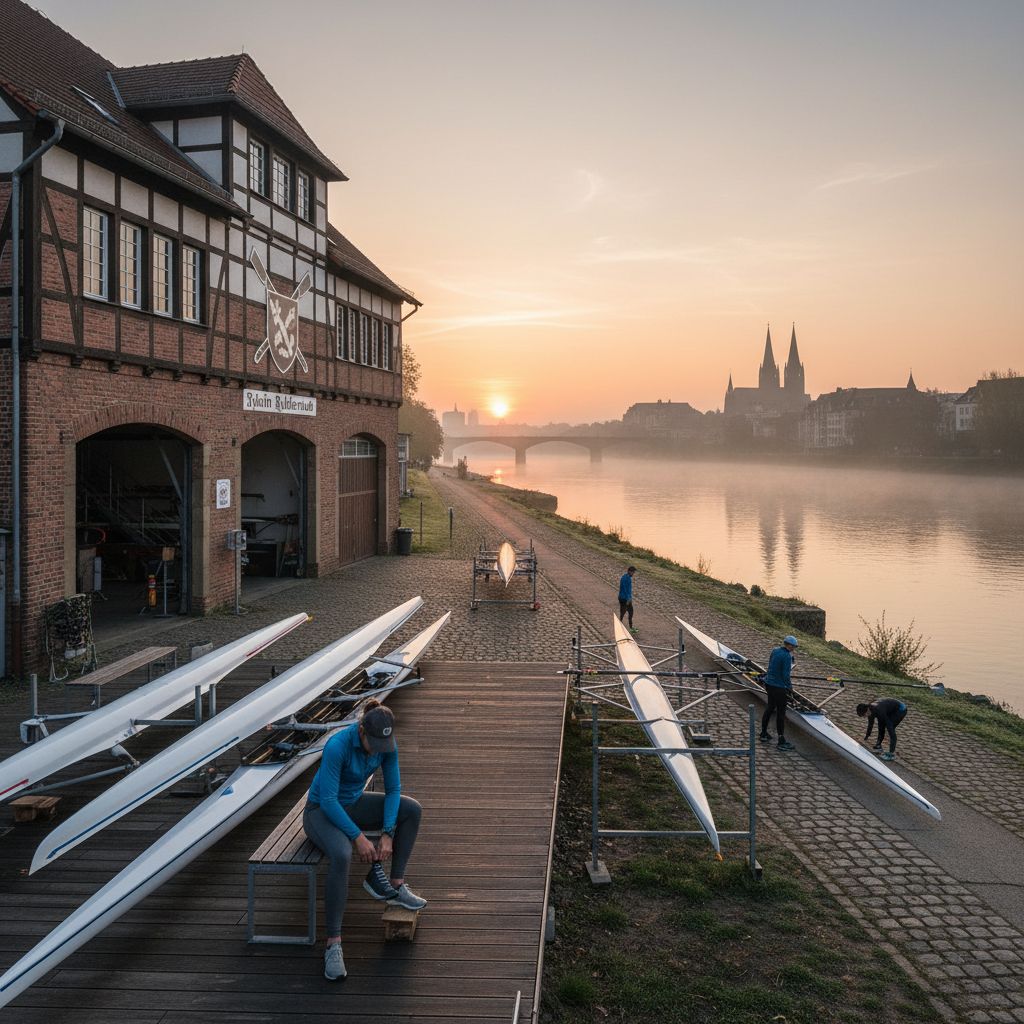
Ich bin 2018 zum Ruderclub gekommen. ___ trainiere ich viermal pro Woche.
Wähle die beste Ergänzung.
Correct: 0/8
Hints for this Quiz
Think: since then = seitdem.
Wähle die beste Ergänzung.
Seitdem here means “since then” and refers back to 2018. It links a past starting point to a continuing present habit.
Ongoing habit since a point in the past = present tense in German.
Achte auf Zeitform und Wortstellung.
Use Präsens for an action that started in the past and is still true. In the seitdem-clause the verb goes to the end: “… ich in Berlin wohne…”.
Timetables and fixtures prefer Präsens in German.
Nutze Präsens für eine feste Zukunftsplanung (Spielplan).
German often uses the present tense for scheduled future events (timetables, fixtures).
‘Since + year’ = seit + Jahr.
Wähle die richtige Präposition/Partikel.
Seit + Zeitpunkt (year) expresses “since 2015”. Schon = already; seitdem introduces a clause or works as “since then,” not with a bare year.
Typical pattern: Wie lange … schon …?
Frage nach Dauer.
Wie lange … schon …? asks “How long have you been … already?”. ‘Seit’ would need a time expression (seit 2019), and ‘seitdem’ needs a clause or means “since then.”
Question: Seit wann …? Answer: seit + year/date.
Achte auf Fragewort und Antwortformat.
Use ‘Seit wann …?’ to ask for the starting point, and answer with ‘seit + Zeitpunkt’: seit 2022.
Clear future time + plan = Präsens works well.
Geplante Zukunftsreise.
Präsens is common for near, planned future actions in German, especially with a clear time adverbial.
Subclause with verb at the end → seitdem.
Wähle die richtige Konjunktion.
Seitdem introduces a subordinate clause (verb at the end): ‘Seitdem wir … haben’. ‘Seit’ is a preposition, not a conjunction; ‘schon’ doesn’t introduce clauses.
Discover next:
Do you like it? Want more?
Free & quick registration, no subscriptions!
🤗
For expats and alike – unlike any other language app you've tried!
🎮
Learn by scrolling and playing!
💪
Real grammar and idioms to sound like locals!
🧠
Endless FYP feed for language learning
🧠
Endless FYP feed for language learning
Related articles
Materials on related topics will help expand your understanding of the topics: