
Cantidad e intensidad: elige el cuantificador correcto (A2)
Cantidad e intensidad: elige el cuantificador o intensificador correcto en frases simples.
 Dannis
Keywords:
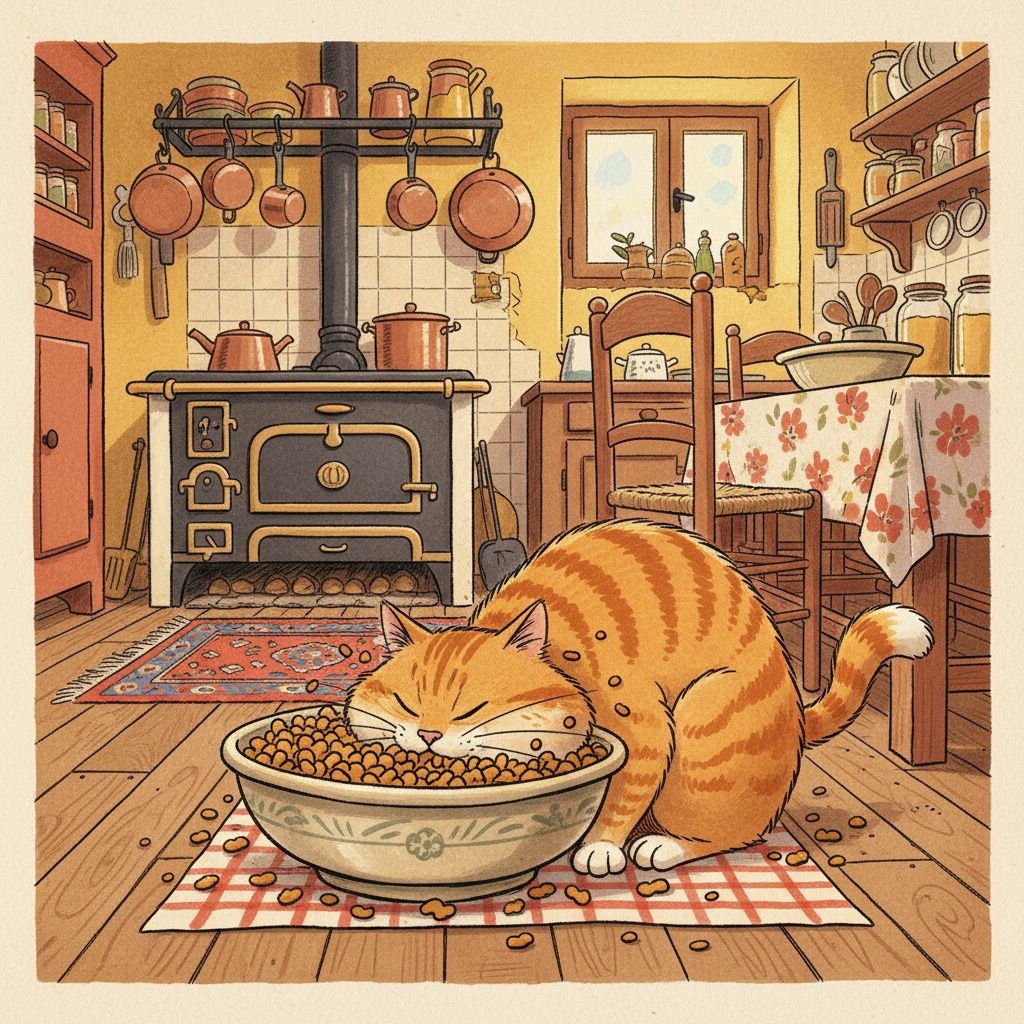
Mi gato come ____ pienso. Está gordito.
Correct: 0/7
Hints for this Quiz
The cat is chubby, so it eats “too” much.
Here you need the idea of “too much”: como + adverbio de cantidad → “come demasiado”. “Bastante” = “quite/enough / a fair bit”, and “poco” = “little / not much”. When they work as adverbs with a verb, the forms “poco / bastante / demasiado” do not change for gender or number. See the summary on adverbios de cantidad.
After hay we put a quantity + noun. The noun is plural → use the plural form.
With a plural noun (“perros”) you need agreement: “tantos perros”. “Tan” goes with adjectives/adverbs, and bare “tanto” (without agreement) does not go with nouns. Equality pattern: “tanto/a/os/as + sustantivo (+ como)”.
With adjectives we use the pattern “tan … como”.
Equality comparison with an adjective: “tan + adjetivo + como” → “tan rápido como”. “Tanto” / “tantos” are used with nouns or with verbs (verbo + tanto como).
The phrase “it drives me crazy” suggests the meaning “too”.
Before an adjective you can intensify the degree: “demasiado lenta” = “too slow”. “Bastante” = “quite / fairly”, and “poco” with adjectives sounds odd here (“not very …” — more natural would be something like “poco rápida”, but in this sentence it’s unnatural). See the overview of quantity adverbs (bastante / demasiado / poco).
If you need to buy more, there isn’t much food now.
With the noun “comida” (feminine singular) you need an agreeing quantitative adjective: “poca comida” = not much food. “Bastante comida” = “enough / quite a lot”, and “demasiada comida” = “too much”. These words agree with the noun in gender and number.
After the verb in a comparison with “como” (“as … as”) → “tanto como”.
With a verb we use the equality pattern: “verbo + tanto como”: “no come tanto como (el gato)”. “Tan” goes with adjectives/adverbs; “tantos” goes with plural nouns.
It’s very noisy → “too much / too loudly”.
With a verb we use the adverb form without agreement: “ladra demasiado” = “barks too much / too loudly”. “Bastante” = “quite a lot / enough”, and “tan” is not used with verbs. See the summary on adverbios de cantidad.
Discover next:

Do you like it? Want more?
Free & quick registration, no subscriptions!
🤗
For expats and alike – unlike any other language app you've tried!
🎮
Learn by scrolling and playing!
💪
Real grammar and idioms to sound like locals!
🧠
Endless FYP feed for language learning
🧠
Endless FYP feed for language learning
Related articles
Materials on related topics will help expand your understanding of the topics: