Habla natural: dar + sustantivo (miedo, ganas, igual)
 Dannis
Keywords:
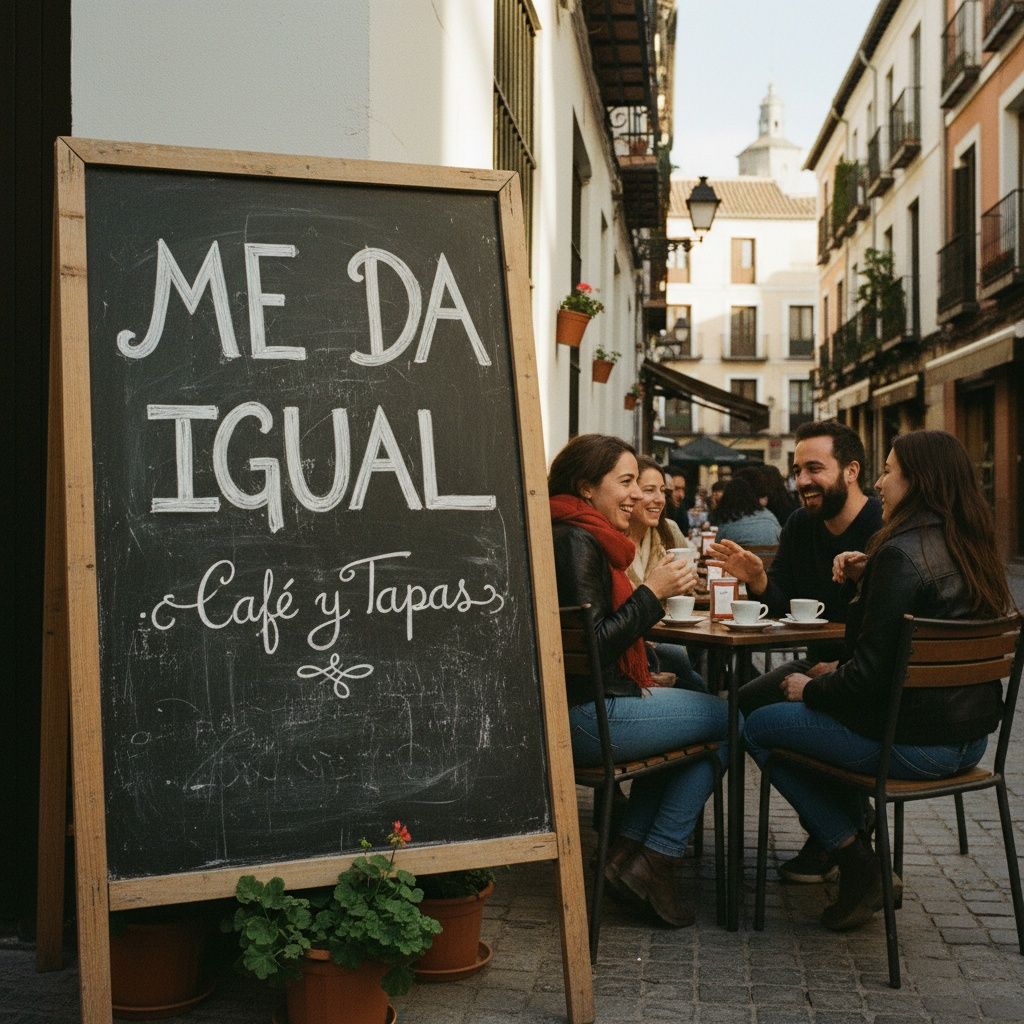
Pattern: a alguien + le/les + da(n) + noun. E.g.: A mí me da miedo volar. A Juan le dan ganas de salir. A ella le da igual todo. In English, these work like: "I’m scared", "I feel like it / I want to", "I don’t care / It’s all the same to me".
dar miedo = sentir miedo. Singular/plural: Me da miedo el avión. Me dan miedo las arañas. Tip: the verb agrees with the noun that causes the emotion.
dar ganas de + infinitivo = apetecer (colloquial). Me dan ganas de comer sano. After "ganas", use "de" + infinitive.
dar igual = no importar. Neutral colloquial register in Spain: Me da igual / Lo mismo. Note: "me es indiferente" sounds formal.

Pronouns: me/te/le/nos/os/les go before "dar". E.g.: Me da igual; ¿Te dan ganas de salir? You can add "a mí / a Juan" to make it clearer.
In informal health contexts: you’ll hear "me da guerra la muela" (=it bothers me) and also "me da miedo la anestesia". Useful at the doctor’s.
Reminder: dar + noun = "to cause / give" an emotion or desire: me da miedo (I’m scared / it scares me), me dan ganas de (I feel like / I want to), me da igual (I don’t care / it’s all the same to me).
Comprehension check:
Discover next: