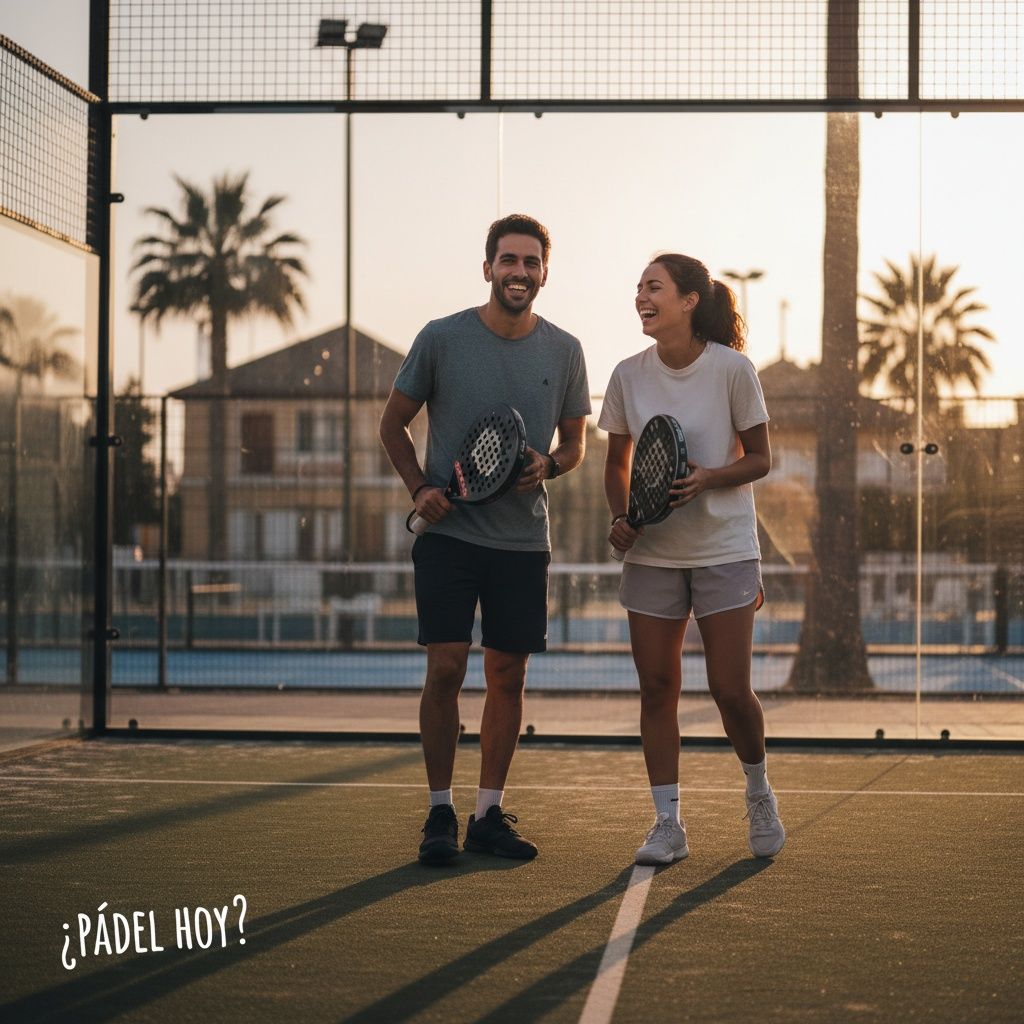
Invitar a hacer deporte (España): frases naturales

Banco de frases para invitar a hacer deporte + elige la respuesta más natural.
DannisDannis
3 min reading time
(Illustration)

Phrase bank for inviting someone to do sports. European Spanish (Spain). Short, useful phrases for levels A2–B1.

¿Te apetece + inf.? (like “to feel like doing something / to fancy doing something”). E.g.: ¿Te apetece salir a correr?

¿Te vienes a + inf./sust.? E.g.: ¿Te vienes a jugar un partidito?

¿Quedamos para + inf.? E.g.: ¿Quedamos para nadar el sábado?

More direct alternatives: ¿Quieres…? / ¿Puedes venir a…? Natural and frequent.

Confirming: Me viene bien a las 20:00. (“That works for me / That time is good for me”). — Genial, nos vemos en la pista.

Saying no with a plan B: Me pilla mal hoy (“That doesn’t work for me today / It’s not a good time today”). ¿Mañana te viene bien?

Details: ¿Dónde quedamos? En la pista 3. ¿Llevas raqueta? Llevo yo una de sobra.

Context: Padel is a common plan after work in Spain. Suggesting a sports “meet-up” is typical among friends and also in class to practice conversation.

(Illustration)

Comprehension check:

Choose the most natural answer: “¿Quedamos para jugar al pádel mañana?”
Me viene bien.
Estoy quemado.
Hasta luego.
“Me viene bien” = it suits me / that time works for me. “Estoy quemado” = I’m burned out / exhausted (not really an answer to an invitation). “Hasta luego” = a formal way to say goodbye.
Look for the option that means “it’s convenient / it works for me.”
Complete: “Hoy me ____ mal, ¿te parece el viernes?”
pilla
apetece
queda
“Me pilla mal” = it’s not a good time for me / it doesn’t work for me today. “Apetece” is about wanting something, not about schedule. “Me queda mal” is not natural for talking about time (it’s more about clothes fitting badly).
The phrase is about today being “not convenient” in terms of time.
¿Cuál es la invitación correcta para correr?
¿Te vienes a correr?
¿Te vienes a corrido?
¿Te vienes correr?
Structure: “venirse a + infinitivo”. “Corrido” is a past participle, and in the third option the preposition “a” is missing.
Remember: “venirse a + infinitivo”.

Discover next:

Related articles

Materials on related topics will help expand your understanding of the topics: