
Mini-diálogos de bar/tienda: pedir y pagar (coloquial)
Mini-diálogos de bar/tienda para practicar pedir y pagar con fórmulas coloquiales peninsulares y respuestas corteses.
 Dannis
En barra. Completa: Camarero: —______. Cliente: —Un café con leche, por favor.
Correct: 0/6
Hints for this Quiz
Hint: this is said by the bartender, not the customer.
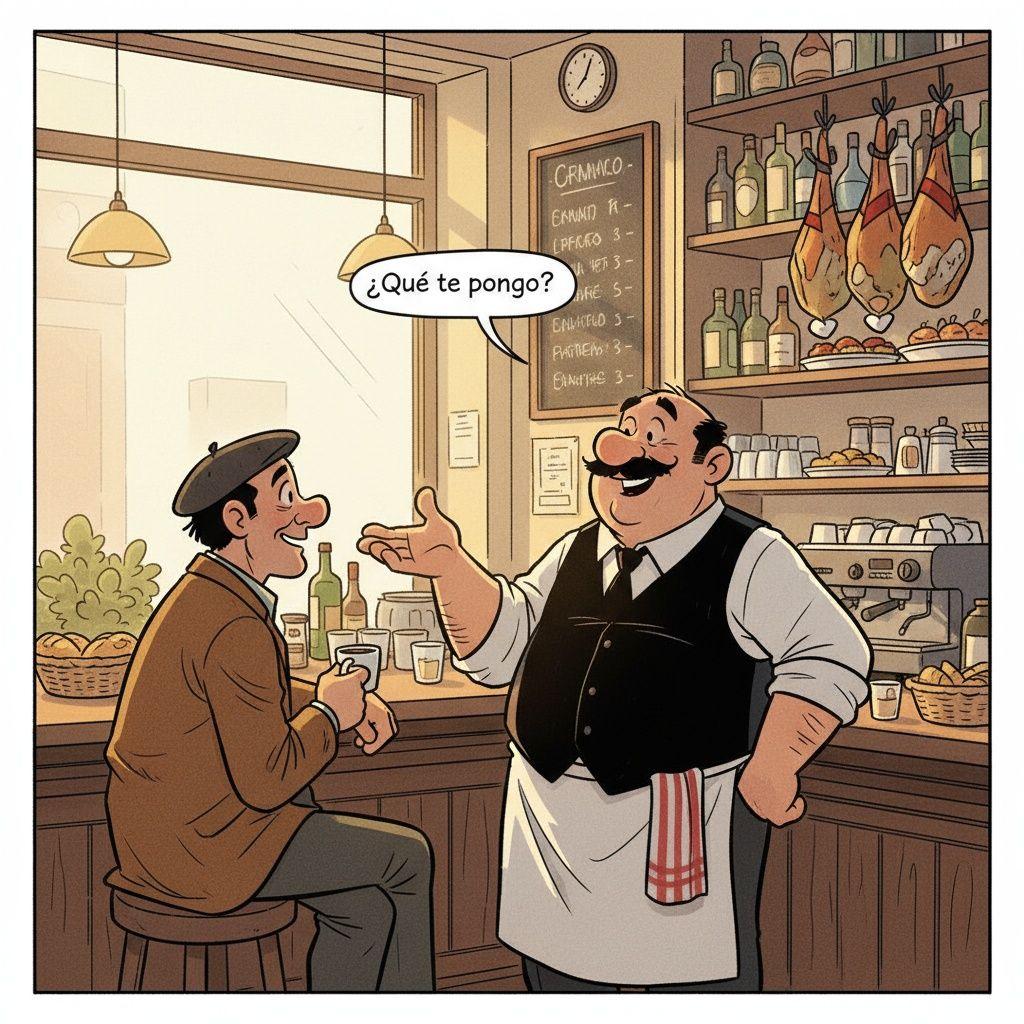
In Spain, "¿Qué te pongo?" is the standard question a bartender/shop assistant asks: "What can I get you?/What can I serve you?" This is how an order usually starts in a bar or at a market stall.
This is the imperative (command form) for tú.
The form "Ponme…" is colloquial (tú). The polite usted form is "Póngame…". When ordering at a bar with a friendly/informal tone, "Ponme…" is more common.
Look for the option with the verb "cobrar".
"¿Me cobras (cuando puedas)?" is a very natural, Spanish way of saying "Can I pay?" or "Can you charge me?". "¿Cuánto es?" is also appropriate.
A short, colloquial question asking for the total to pay.
The phrase "¿Qué te debo?" — "How much do I owe you?" — is typical when paying in small shops and bars.
A polite refusal + "thank you".
To "¿Te pongo algo más?" (offering you something else), the natural answer is: "Nada más, gracias".
This formula is the most frequent neutral way to say goodbye.
In Spain, people usually say "Hasta luego" when leaving everyday shops; "Adiós" sounds more final and is less common in this situation.
Discover next:

Do you like it? Want more?
Free & quick registration, no subscriptions!
🤗
For expats and alike – unlike any other language app you've tried!
🎮
Learn by scrolling and playing!
💪
Real grammar and idioms to sound like locals!
🧠
Endless FYP feed for language learning
🧠
Endless FYP feed for language learning
Related articles
Materials on related topics will help expand your understanding of the topics: