
Pedir con cortesía en España: suena natural en el bar y en el restaurante
Comparación de fórmulas de cortesía para pedir en restaurantes; elige la opción más natural.
 Dannis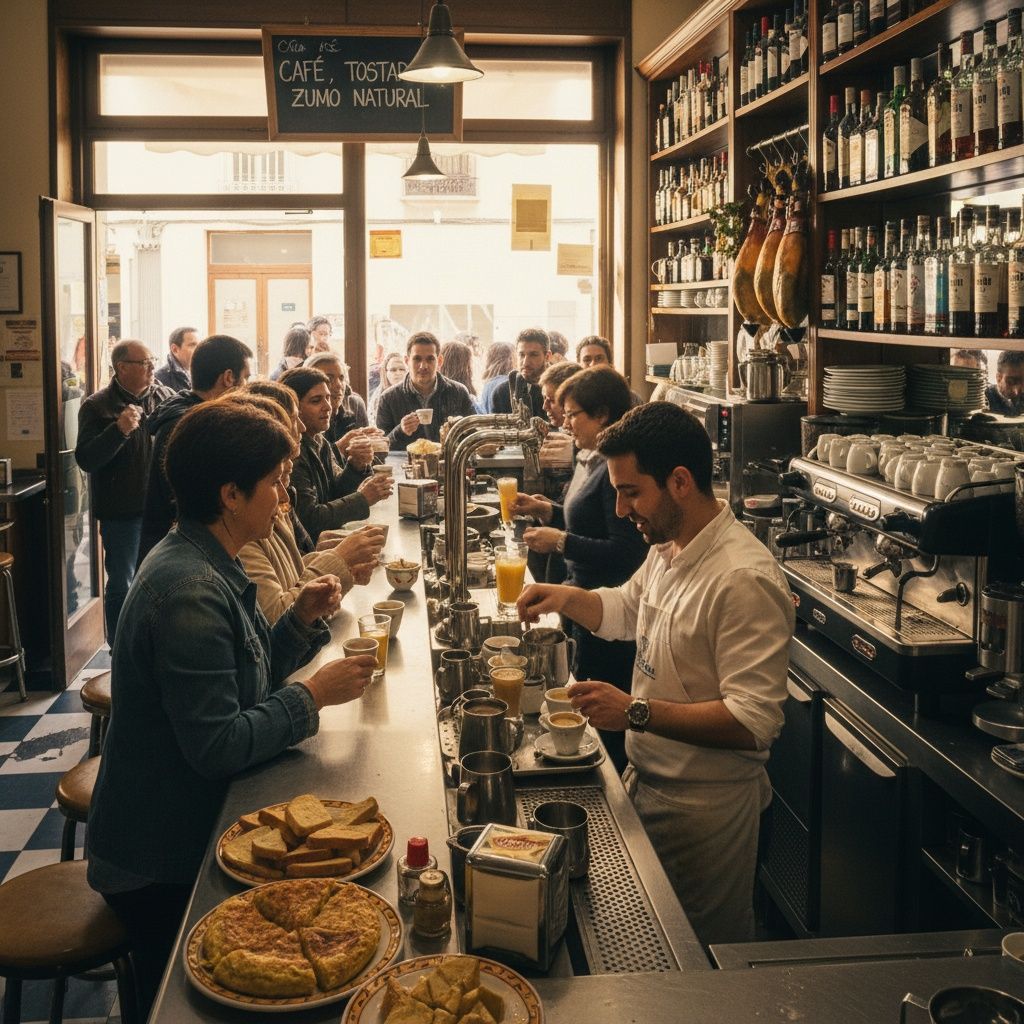
Estás en la barra de un bar. Pide un café con leche de forma natural.
Correct: 0/6
Hints for this Quiz
Think of the typical phrase a bartender uses: "¿Qué te pongo?".
In bars in Spain it’s very common to use the verb "poner" when ordering. "¿Qué te pongo?" is a typical line from the bartender or waiter, so "Me pones…" sounds natural and friendly.
Politeness here = 3rd person: "¿Nos trae…?" + "por favor".
In a restaurant, "¿Nos trae… + por favor?" sounds polite and standard. Using the imperative without any softener ("Tráenos…", "Ponnos… ahora mismo") can sound a bit harsh.
Spanish speakers often soften a request using a past tense: "Quería…".
A very common polite softener is "Quería + infinitivo". "Querría" is more formal/literary; "Quiero" sounds more blunt/direct.
Use the friendly formula you often hear in bars/cafés.
"¿Me cobras (cuando puedas)?" is a very typical and friendly phrase all over Spain. "Dame la cuenta" sounds blunt.
In bars there’s minimal formality: "ponme… / me pones…" + "por favor".
At the bar, "Ponme…/Me pones…" sounds more natural. The formal "Tráigame…" is okay but less typical in a bar. "Me gustaría…" is polite but doesn’t sound natural for a quick order at the bar. Compare with the usual "¿Qué te pongo?" from the bartender.
Choose the option with the conditional — it sounds softer and more formal.
"Querría…" (conditional) sounds more formal and careful. "Quiero… ya" is very direct; "Me pones…" is more typical of a bar context.
Discover next:

Do you like it? Want more?
Free & quick registration, no subscriptions!
🤗
For expats and alike – unlike any other language app you've tried!
🎮
Learn by scrolling and playing!
💪
Real grammar and idioms to sound like locals!
🧠
Endless FYP feed for language learning
🧠
Endless FYP feed for language learning
Related articles
Materials on related topics will help expand your understanding of the topics: