
Bar español: para llevar, para aquí, barra o mesa alta
Tarjeta vocab: frases básicas coloquiales en un bar español.
 Dannis
Keywords:
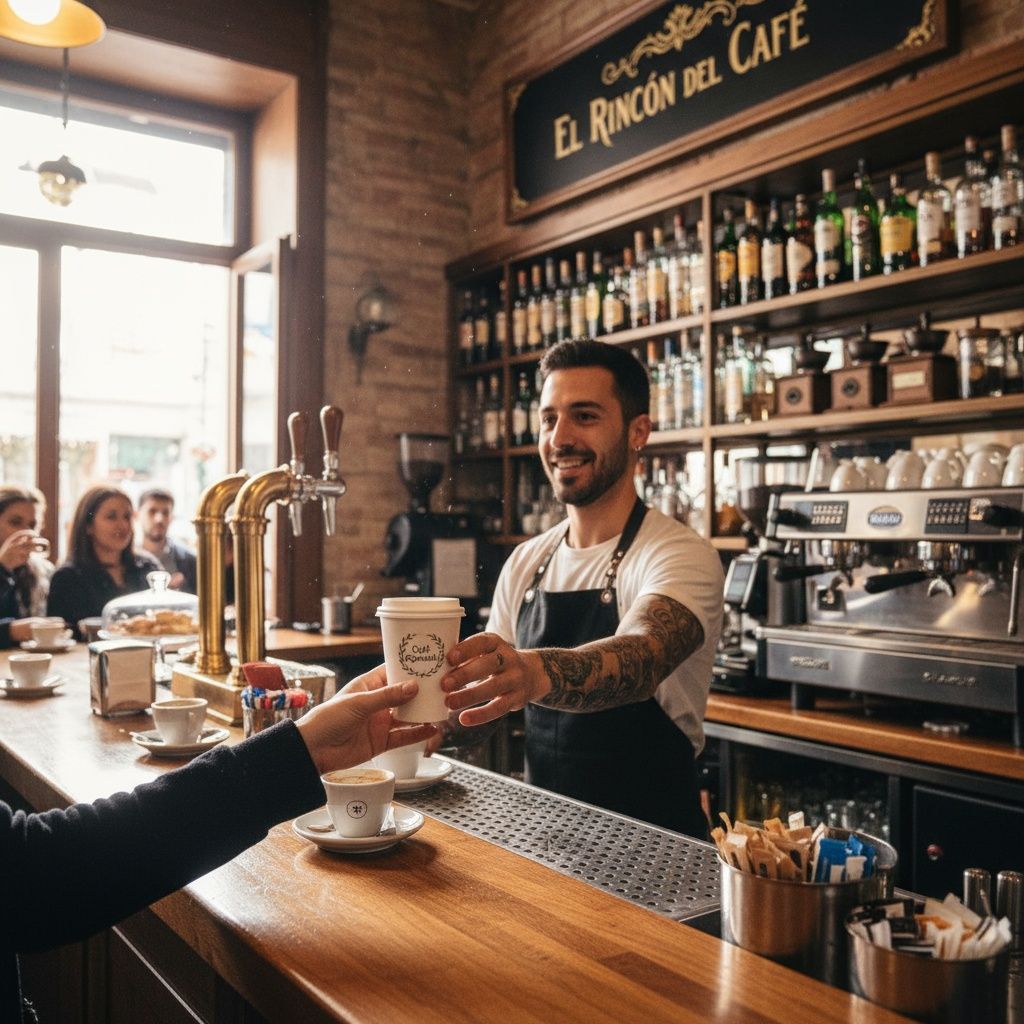
Estás en un bar y quieres el café para beber fuera. ¿Qué dices?
Correct: 0/7
Hints for this Quiz
Think: you’re taking the coffee with you (to go).
"Para llevar" = "to go / to take away". "Para aquí" = "for here". It’s useful to add "por favor" (please).
You’re staying in the bar.
"Para aquí" means you eat/drink here. "Para llevar" means you take it away (to go).
Stand next to the bartender.
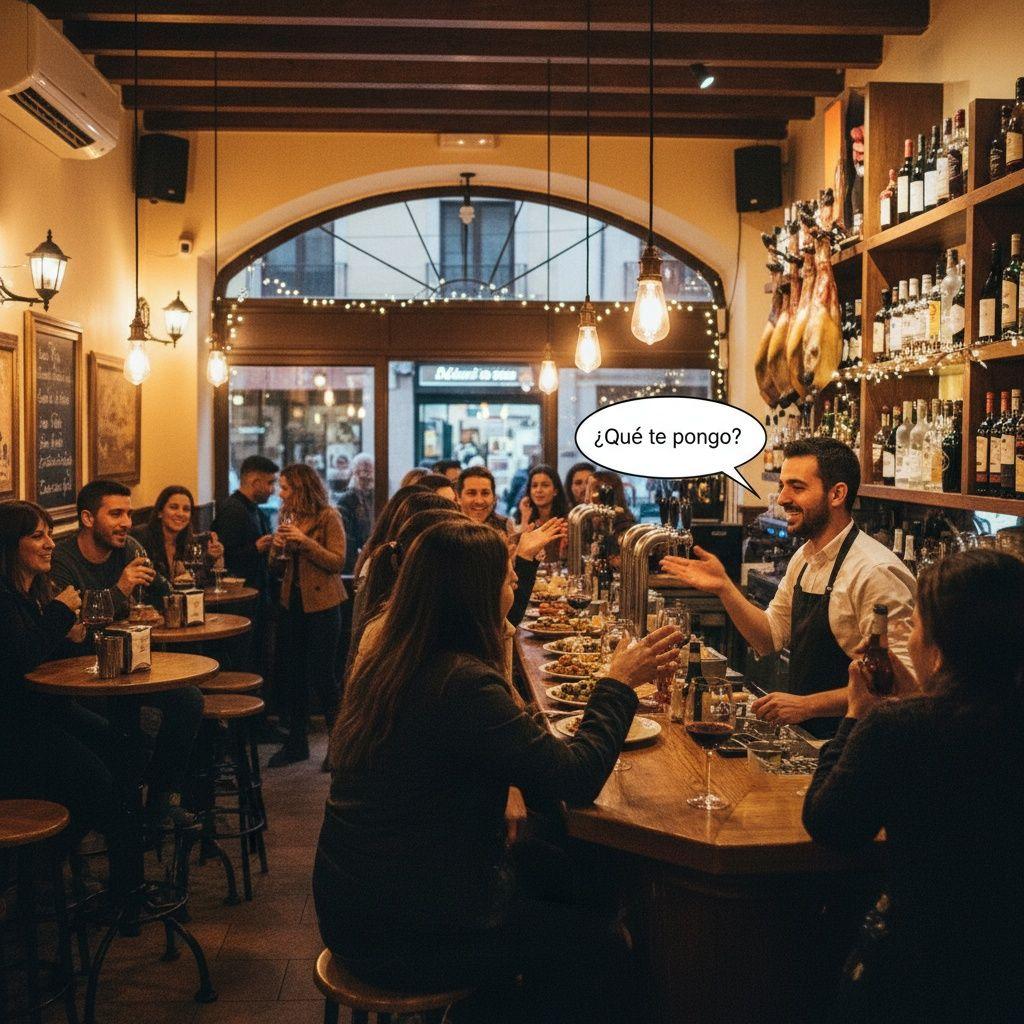
"Barra" = the bar counter. Very often that’s where the bartender notices you and says: "¿Qué te pongo?" – a typical phrase in bars in Spain.
Use "poner": "Ponme…" like "Give me / Fix me…".
In bars you often hear: "¿Qué te pongo?" (literally “what shall I put for you?”, meaning “what can I get you?”). A natural answer is: "Ponme…" + product: "Ponme un café…". This is a common colloquial expression in Spain, especially when ordering "en barra" (at the counter).
Politely ask them to bring or charge you the bill.
In Spain it’s very natural to say: "¿Me cobras, por favor?" (= "Could you charge me, please? / Can I pay, please?"). You’ll also hear "¿Cuánto es?" and "¿Qué te debo?".
You’re eating here.
"Para aquí" = "for here". It’s convenient to add this phrase to your order.
You’re looking for a high table for a quick bite.
"Mesa alta" = high table (often for standing or sitting on stools). It’s useful when you want to eat something quickly.
Discover next:

Do you like it? Want more?
Free & quick registration, no subscriptions!
🤗
For expats and alike – unlike any other language app you've tried!
🎮
Learn by scrolling and playing!
💪
Real grammar and idioms to sound like locals!
🧠
Endless FYP feed for language learning
🧠
Endless FYP feed for language learning
Related articles
Materials on related topics will help expand your understanding of the topics: