
Du oder Sie? Richtig anreden im Amt
Mini-Szenen: „du“ oder „Sie“? Richtige Anrede und Verbform wählen (3 kurze Dialoge).
 Dannis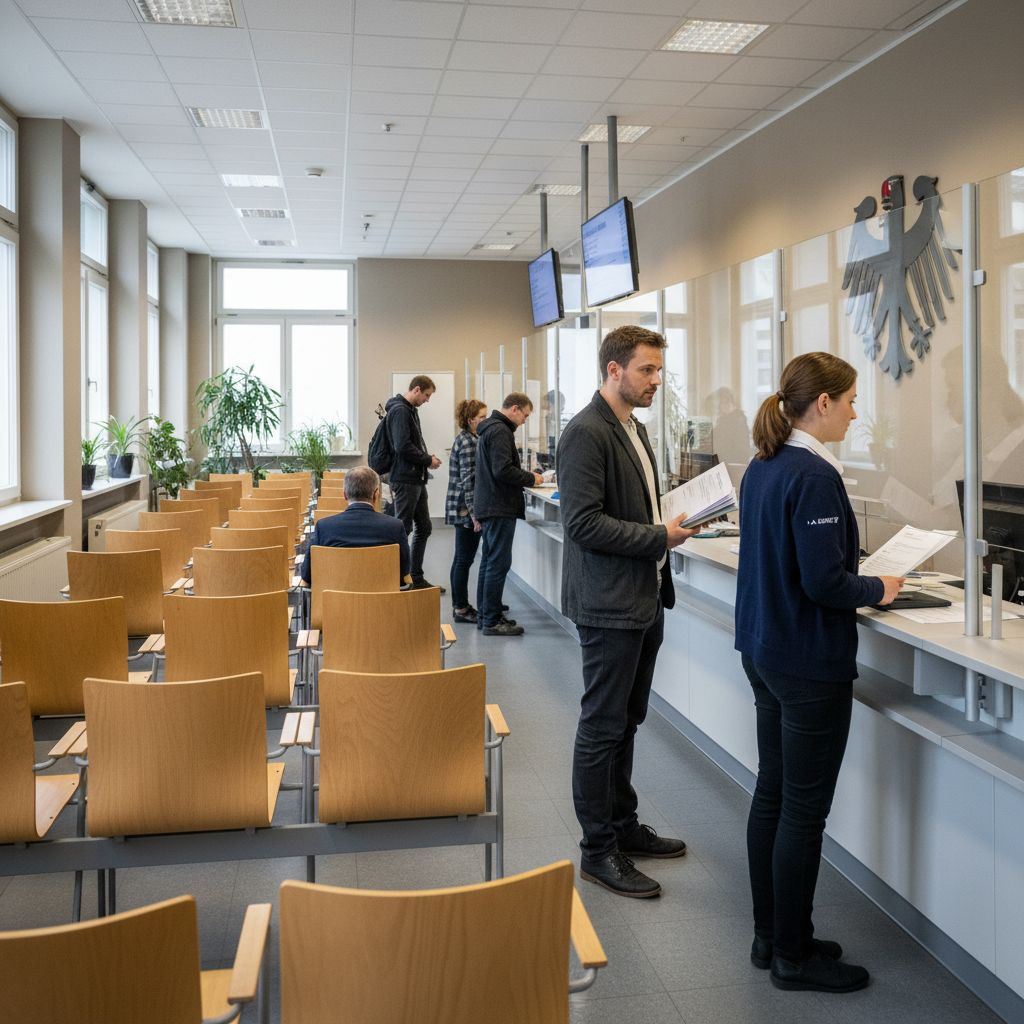
Im Amt: Welche Anrede ist höflich und korrekt? Guten Tag, _____ Schmitt. Ich habe einen Termin.
Die Mitarbeiterin heißt Anna Schmitt.
Correct: 0/8
Hints for this Quiz
In offices, always use Herr/Frau + Nachname.
Die Mitarbeiterin heißt Anna Schmitt.
With last names, use Herr/Frau + Nachname in formal situations. Fräulein is outdated/impolite, and Liebe is too informal for an office.
First gap: formal Sie. Second gap: ich-form.
Use Sie for formal address: Können Sie. In the second clause the subject is ich, so use kann.
Think of du + können in present tense.
Talking to one person informally uses du: kannst du …?
Use the most formal greeting for authorities.
Formal letters and emails start with Sehr geehrte Frau + Nachname.
After Entschuldigen Sie comes a normal ich-question.
The subject is ich, so use kann in the direct question after the polite phrase.
For Sie-imperative, use the infinitive + Sie.
Imperatives with Sie use the infinitive + Sie: Warten Sie bitte …
Match formal title with Sie + correct verb form.
With Frau + Nachname, use Sie and the correct verb form: können Sie …?
Use du + kannst for the informal singular.
Change Sie können to du kannst and keep the word order: Du kannst hier unterschreiben.
Discover next:

Do you like it? Want more?
Free & quick registration, no subscriptions!
🤗
For expats and alike – unlike any other language app you've tried!
🎮
Learn by scrolling and playing!
💪
Real grammar and idioms to sound like locals!
🧠
Endless FYP feed for language learning
🧠
Endless FYP feed for language learning
Related articles
Materials on related topics will help expand your understanding of the topics: