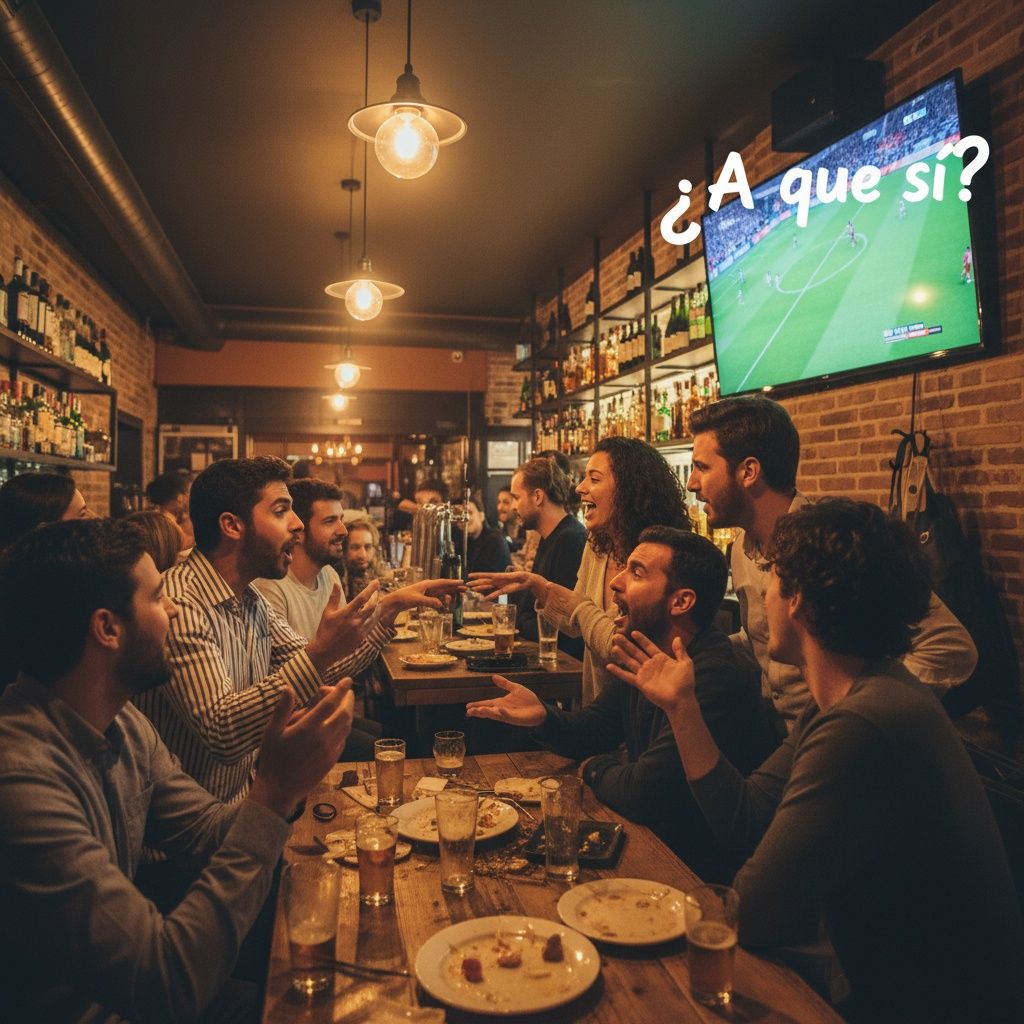
¿A que sí?, ¿verdad?, ¿no? + Hombre/Mira en tertulias de bar (fútbol)

Etiquetas de confirmación en tertulias de bar: completa 3 réplicas naturales.
DannisDannis
3 min reading time
(Illustration)

In bar chats about football, Spanish speakers ask for confirmation with tag questions and fillers. It’s similar to English “right?” or “isn’t it?” at the end of a sentence.

¿no? = neutral; ¿verdad? = a bit friendlier; ¿a que sí? = strong complicity / “you agree, right?”. E.g.: "Ha sido penalti, ¿a que sí?" – “It was a penalty, wasn’t it?” (with strong expectation of agreement).

(Illustration)

These tags go at the end: "Jugó mejor, ¿no?" “He played better, didn’t he?” "Está en forma, ¿verdad?" “He’s in good shape, right?” Intonation: slightly rising at the end.

(Illustration)

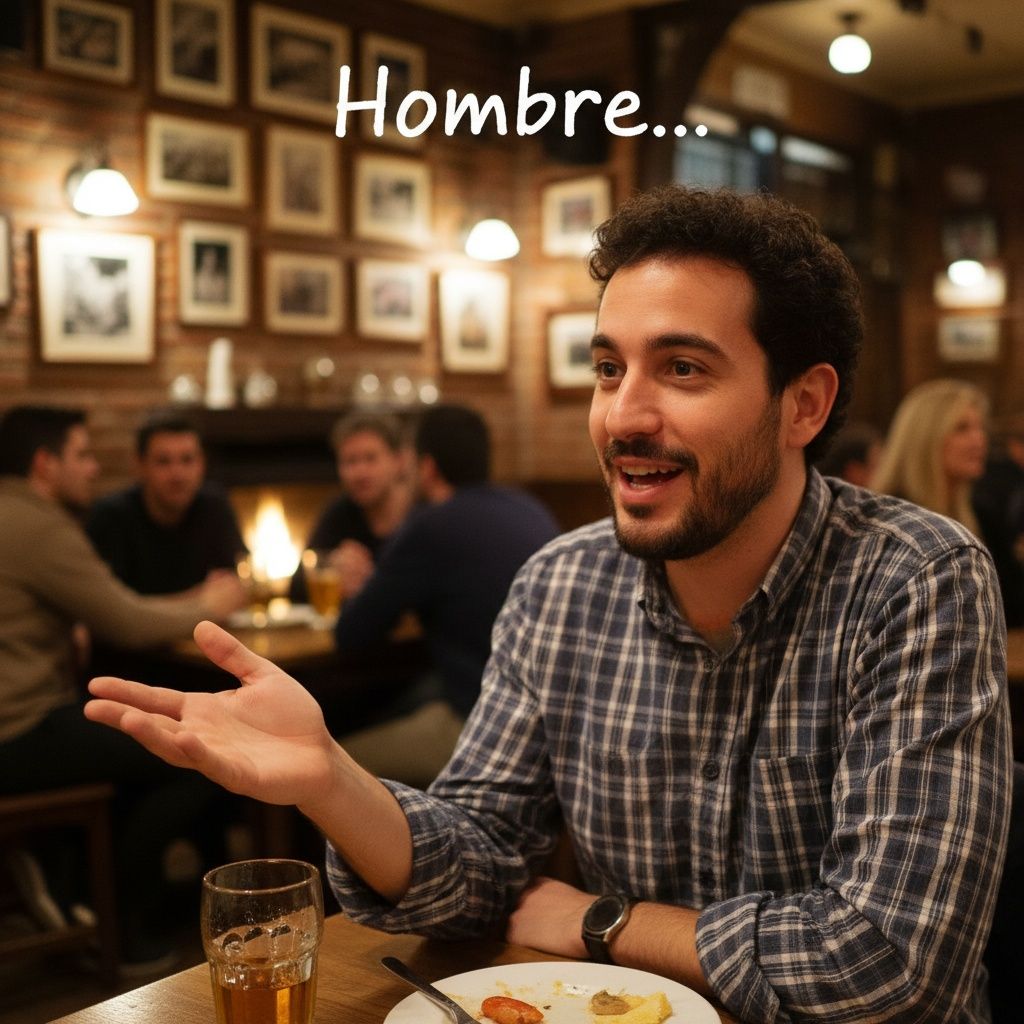
Hombre… = softens or shows mild disagreement: "Hombre, jugó bien, pero…" Similar to starting in English with “Come on, he played well, but…” / “Listen, I mean, he played well, but…”. It makes the disagreement less harsh.
(Illustration)

Mira / Oye = get the other person’s attention before your argument: "Mira, el VAR lo dice" – “Look, VAR says so.” "Oye, calma" – “Hey, calm down.” Very useful to structure your ideas when you disagree or want to insist on something.

(Illustration)

Sentence-final filler: "¿eh?" also asks for agreement: "Partidazo, ¿eh?" – “Great match, huh?” Use these fillers in moderation.

Culture note: in Spanish bar talk, people debate with humor and trust. Do the same: short sentences, friendly tone, and a smile. (Think of it as a casual “bar debate club”.)

Comprehension check:

Completa: Ha sido penalti, ___?
¿no?
¿verdad?
¿a que sí?
Correct answer: "¿a que sí?". This tag sounds more insistent and strongly invites agreement (like “wasn’t it, though?” / “right, yeah?”). In a lively bar discussion about football, it’s common to use it to reinforce your opinion.
Look for the form that pulls the listener into agreeing with you most strongly.
¿Qué comunica «Hombre,…» al inicio de tu réplica?
Mandar callar a la otra persona
Suavizar o discrepar con matiz
Pedir confirmación directa
Presentar un dato objetivo
"Hombre" works as an interjection to soften or introduce nuanced disagreement. Compare reactions like "¡Anda ya, hombre!" (expressing disbelief) and the ironic use "Sí, hombre, claro…" (sarcasm).
Think of a little word that opens a soft disagreement, not a question.
Elige la mejor opción para iniciar un argumento: ___, el gol estaba en fuera de juego.
¿verdad?
Mira
¿no?
"Mira" (and "Oye") are used to get the other person’s attention and introduce your argument. Compare: "Mire, llevo 40 minutos…" – similar to English “Look, I’ve been waiting 40 minutes…”, or everyday colloquial "Oye…" – “Hey, listen…”.
We’re looking for a discourse marker to attract attention, not a tag that asks for confirmation.

Discover next:

Join Action Section
Do you like it? Want more?
Free & quick registration, no subscriptions!
🤗
For expats and alike – unlike any other language app you've tried!
🎮
Learn by scrolling and playing!
💪
Real grammar and idioms to sound like locals!
🧠
Endless FYP feed for language learning
🧠
Endless FYP feed for language learning

Related articles

Materials on related topics will help expand your understanding of the topics: