“Llevo 20 minutos esperando”: duración en la cola
 Dannis
In the supermarket queue, we use **llevar + gerundio** to talk about how long an action has been in progress: "Llevo 20 minutos esperando" (literally: "I’ve already been waiting for 20 minutes").
Formula: **llevar + length of time + gerundio**.
Examples:
- "Llevamos media hora haciendo cola" – "We’ve been queuing for half an hour."
- "¿Cuánto tiempo llevas esperando?" – "How long have you been waiting?"
- "Llevo poco, cinco minutos" – "Not long, five minutes."
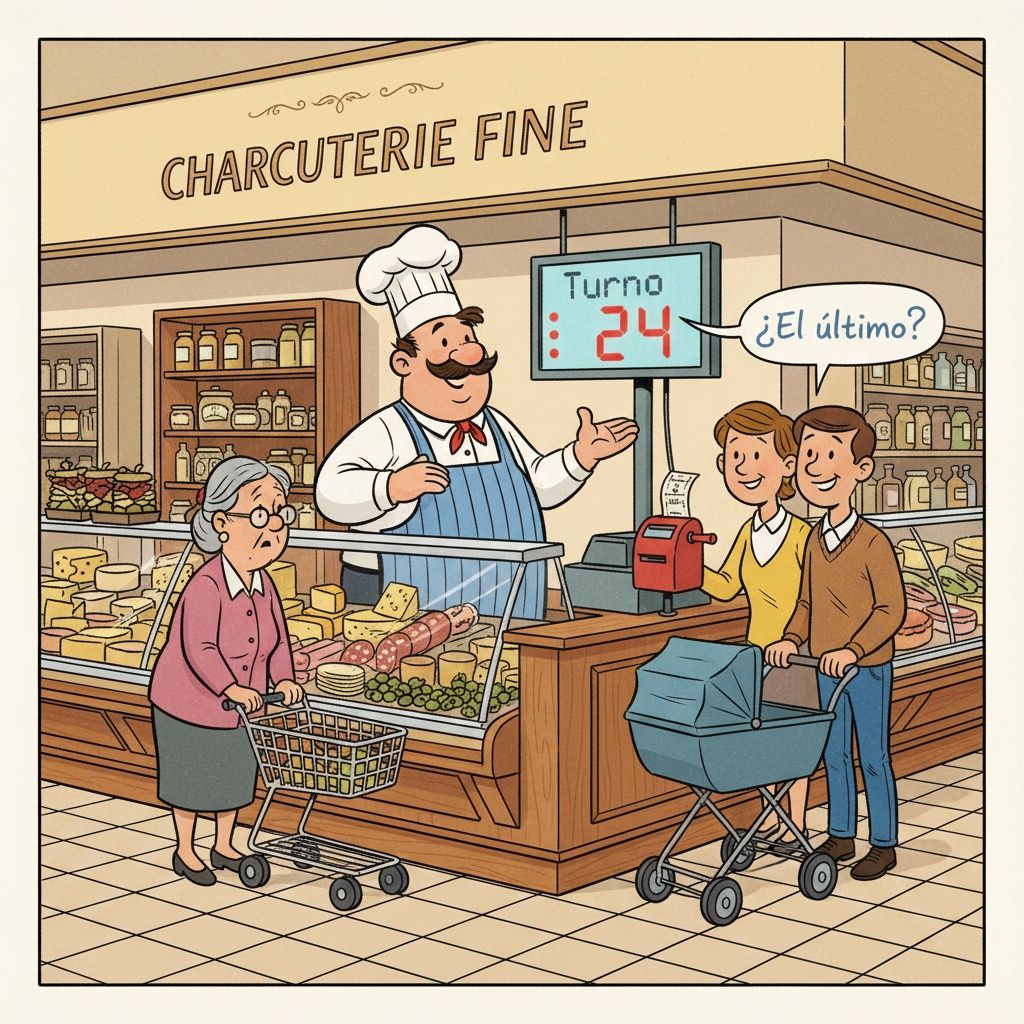
Culture: in Spain, when you join a queue you ask **"¿Quién es el último?"** to know who is right before you in line. People take the queue very seriously. (Similar to asking in English: "Who’s last?")
Desde hace + period of time expresses a duration that is still continuing: - "Estoy en la cola desde hace 20 minutos" – "I’ve been in the queue for 20 minutes." Also: desde + clock time/date: - "Estoy en la cola desde las 18:00" – "I’ve been in the queue since 6 p.m."
Useful equivalent: **"Hace + length of time + que + verb"**.
- "Hace 20 minutos que espero" – "I’ve been waiting for 20 minutes."
This is similar in meaning to "llevar + gerundio" in the present ("Llevo 20 minutos esperando").

Mini-dialogue:
— ¿El último?
— Yo.
— Gracias. Llevo 20 minutos esperando.
— Uf, yo desde hace diez. Paciencia…
— Sí, en España no se cuela nadie.
English meaning:
— Who’s last?
— Me.
— Thanks. I’ve been waiting for 20 minutes.
— Ugh, I’ve been here for ten. Patience…
— Yeah, in Spain no one cuts in line.
Comprehension check:
Pattern: **llevar + time + gerundio** = an action that has been going on up to now.
The other options sound unnatural without the structure **"hace + tiempo que…"** or a different word order.
Discover next: