
Cita previa por teléfono: números, fechas y TSI/SIP/CIP
Short listening: receptionist call to book an appointment; pick the date/time and ID requested.
 Dannis
Keywords:
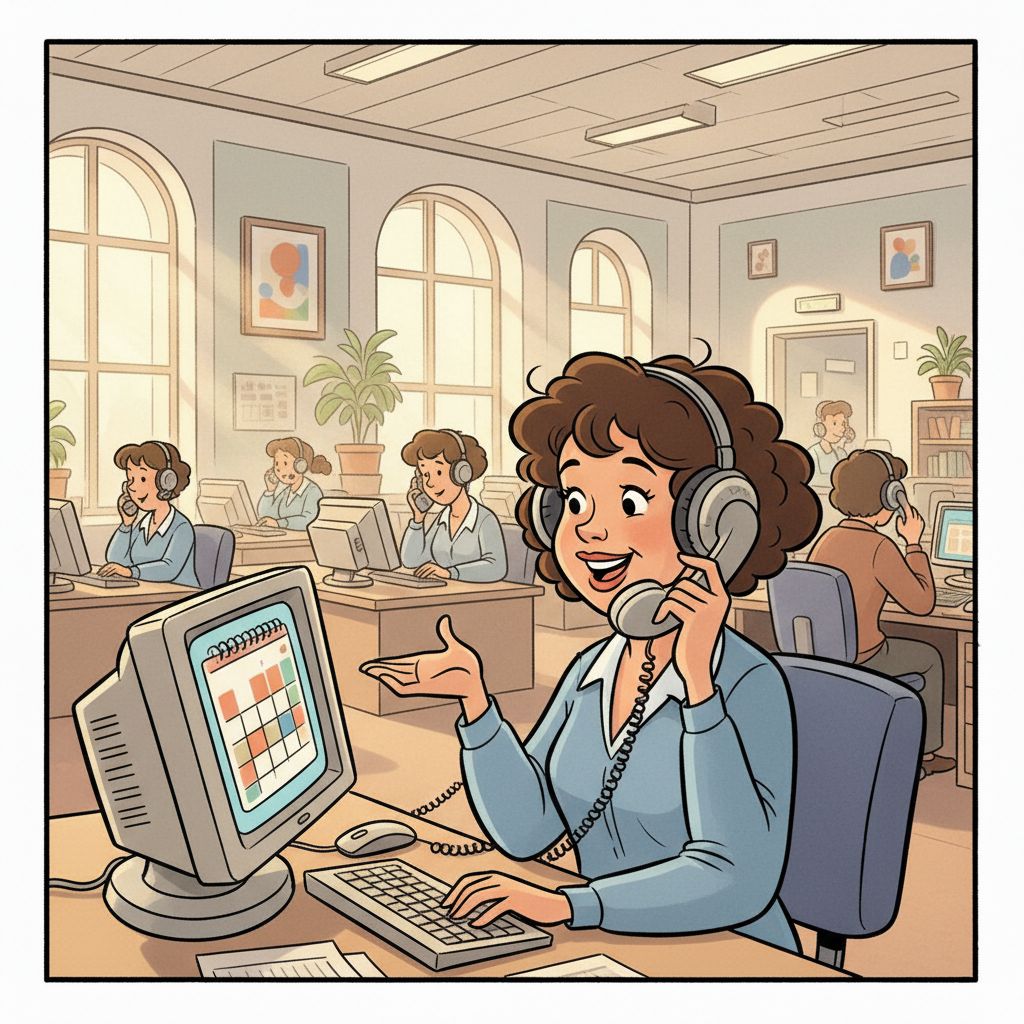
Llamada breve. ¿Qué número le pide la recepcionista?
Read the mini-dialogue:
—Recepción: "Buenos días. Cita previa, ¿en qué puedo ayudarle?"
—Paciente: "Necesito cita con mi médico de familia."
—Recepción: "¿Me dice su TSI/SIP/CIP?"
—Recepción: "Buenos días. Cita previa, ¿en qué puedo ayudarle?"
—Paciente: "Necesito cita con mi médico de familia."
—Recepción: "¿Me dice su TSI/SIP/CIP?"
Correct: 0/7
Hints for this Quiz
Look for the clue in the utterance itself: TSI/SIP/CIP is not a passport and not a NIE.
Read the mini-dialogue:
—Recepción: "Buenos días. Cita previa, ¿en qué puedo ayudarle?"
—Paciente: "Necesito cita con mi médico de familia."
—Recepción: "¿Me dice su TSI/SIP/CIP?"
—Recepción: "Buenos días. Cita previa, ¿en qué puedo ayudarle?"
—Paciente: "Necesito cita con mi médico de familia."
—Recepción: "¿Me dice su TSI/SIP/CIP?"
In Spain, the receptionist usually asks specifically for your public health card number: TSI (national term), but depending on the region it’s called SIP (Valencian Community) or CIP (Catalonia). This is a typical question when making a medical appointment by phone; the different names TSI/SIP/CIP are standard official terms.
"Me viene mejor" = "it suits me better / it’s more convenient for me." Choose the day/time mentioned earlier in the conversation.
The sentence "El martes me viene mejor" confirms the first option: Tuesday the 21st at 10:30. This kind of phrasing and schedule is typical for a phone call to a Spanish health center.
You need a word that pairs with "telefónica" – it contrasts in‑person vs phone consultations.
In primary care they usually offer two formats: in person (presencial) or by phone (telefónica). These exact terms are used in real booking calls.
Centro de Salud = primary care clinic, not a hospital (hospital).
"Centro de Salud" is the usual name for a primary care clinic in Spain (in Catalonia they also say CAP). The excerpt explicitly mentions a Centro de Salud, so that is the place of the visit.
"Y media" means "half past" the hour: 10:30, 11:30, etc.
"Diez y media" = 10:30. When booking appointments you often hear "martes a las 10:30", as in real-life dialogues.
Remember: with adults in healthcare settings, you normally use "usted".
In a medical context in Spain, the standard is the formal "usted" form: "¿En qué puedo ayudarle?" and similar polite formulas.
You might associate València with the letter V… but the official abbreviation there is actually "SIP".
In the Valencian Community the health card and its number are called SIP (Sistema de Información Poblacional). Other regions use CIP (Catalonia), TIS (Basque Country) or TSI (general national term).
Discover next:

Do you like it? Want more?
Free & quick registration, no subscriptions!
🤗
For expats and alike – unlike any other language app you've tried!
🎮
Learn by scrolling and playing!
💪
Real grammar and idioms to sound like locals!
🧠
Endless FYP feed for language learning
🧠
Endless FYP feed for language learning
Related articles
Materials on related topics will help expand your understanding of the topics: