
Mini‑consulta en la farmacia: ¿andas con décimas?
Listening (30s): mini‑consulta en farmacia; responde 3 preguntas.
 Dannis
Escucha/lee la mini‑consulta y responde:
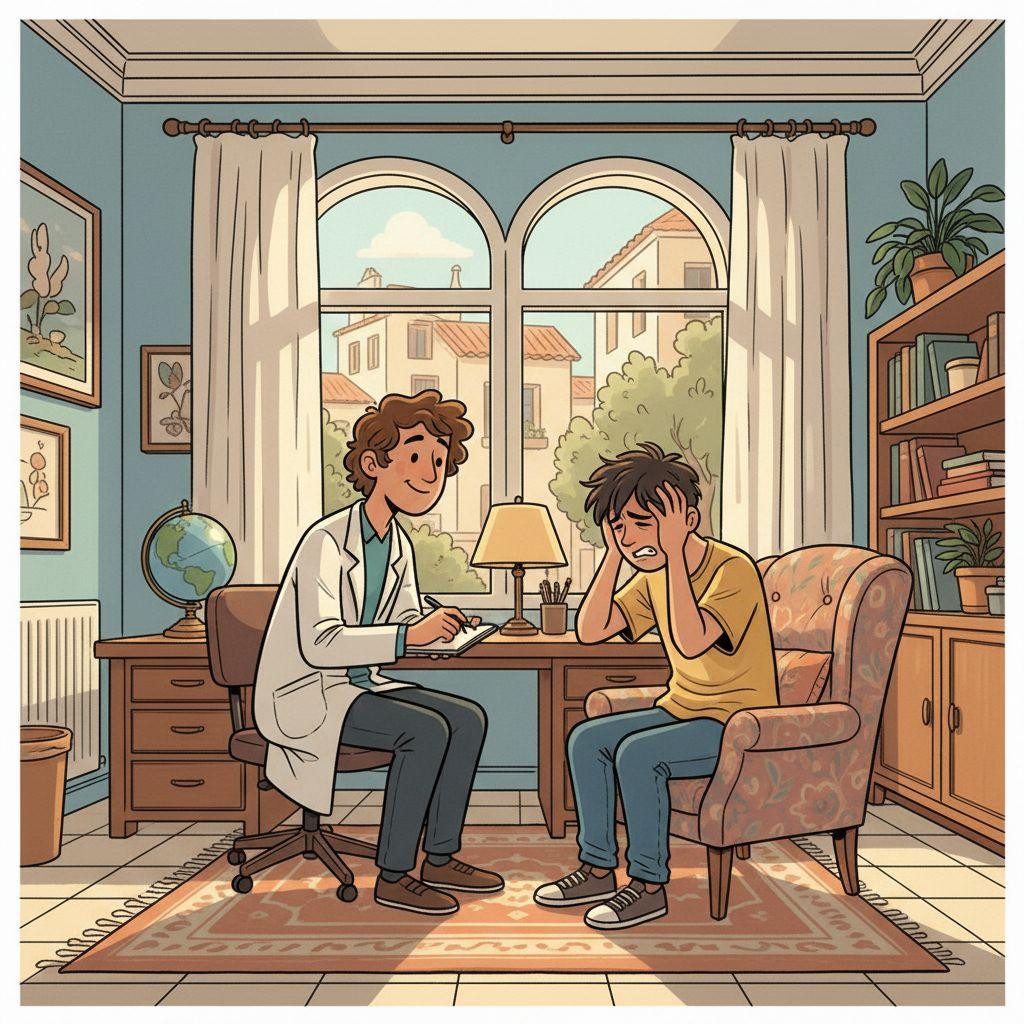
Farmacéutica: "Hola, ¿qué te pasa?"
Lucía: "Estoy un poco pachucha: tengo moquitos, algo de tos y creo que ando con décimas."
Farmacéutica: "¿Desde cuándo?"
Lucía: "Desde anoche. Me duele un poco la tripilla también."
Farmacéutica: "Te doy un jarabe; mano de santo. Tómalo dos veces al día después de comer."
Según la mini‑consulta, ¿qué síntomas tiene Lucía?
Farmacéutica: "Hola, ¿qué te pasa?"
Lucía: "Estoy un poco pachucha: tengo moquitos, algo de tos y creo que ando con décimas."
Farmacéutica: "¿Desde cuándo?"
Lucía: "Desde anoche. Me duele un poco la tripilla también."
Farmacéutica: "Te doy un jarabe; mano de santo. Tómalo dos veces al día después de comer."
Según la mini‑consulta, ¿qué síntomas tiene Lucía?
Correct: 0/8
Hints for this Quiz
Think: which three symptom words does Lucía mention?
Clues in the dialogue: moquitos (nasal mucus, a runny nose), tos (cough), décimas (slightly raised temperature). In current colloquial Spanish, doctors and pharmacists can talk like this to sound closer to the patient. See the explanation of moquitos and of "¿andas con décimas?" meaning a low‑grade fever (subfebrile temperature).
It is not a high fever; it is something mild.
In Spain, tener décimas = to have a low‑grade fever, just slightly elevated (below 38 ºC). The question "¿andas con décimas?" sounds very colloquial.
Think about your nose and a tissue.
Moquitos is the diminutive of mocos; informally: "little snot", a mild runny nose. Even doctors might use this word so patients understand more easily.
It is a diminutive of "tripa".
Tripa = barriga (belly, tummy); tripilla is the affectionate/diminutive form. In spoken language people more often say tripa than estómago.
Think about "dos veces al día" and "después de comer".
The instruction dos veces al día después de comer = two doses a day, after food. In Spanish pharmacy instructions you often see formulas like X veces al día, después de las comidas, en ayunas, etc.
She is not talking about the price; she is talking about the effect.
Mano de santo is an idiom meaning "very effective remedy", "it works like magic". You often hear it in pharmacies talking about syrups.
With a specific moment in time you use "desde + momento".
The correct collocation with a specific point in time is desde + point in time: desde anoche. Desde hace is used with a period of time: desde hace dos días.
It is not a high fever; it is something mild (subfebrile).
37.5 ºC is décimas, a slight fever (febrícula). In conversation people say: "¿andas con décimas?"
Discover next:

Do you like it? Want more?
Free & quick registration, no subscriptions!
🤗
For expats and alike – unlike any other language app you've tried!
🎮
Learn by scrolling and playing!
💪
Real grammar and idioms to sound like locals!
🧠
Endless FYP feed for language learning
🧠
Endless FYP feed for language learning
Related articles
Materials on related topics will help expand your understanding of the topics: