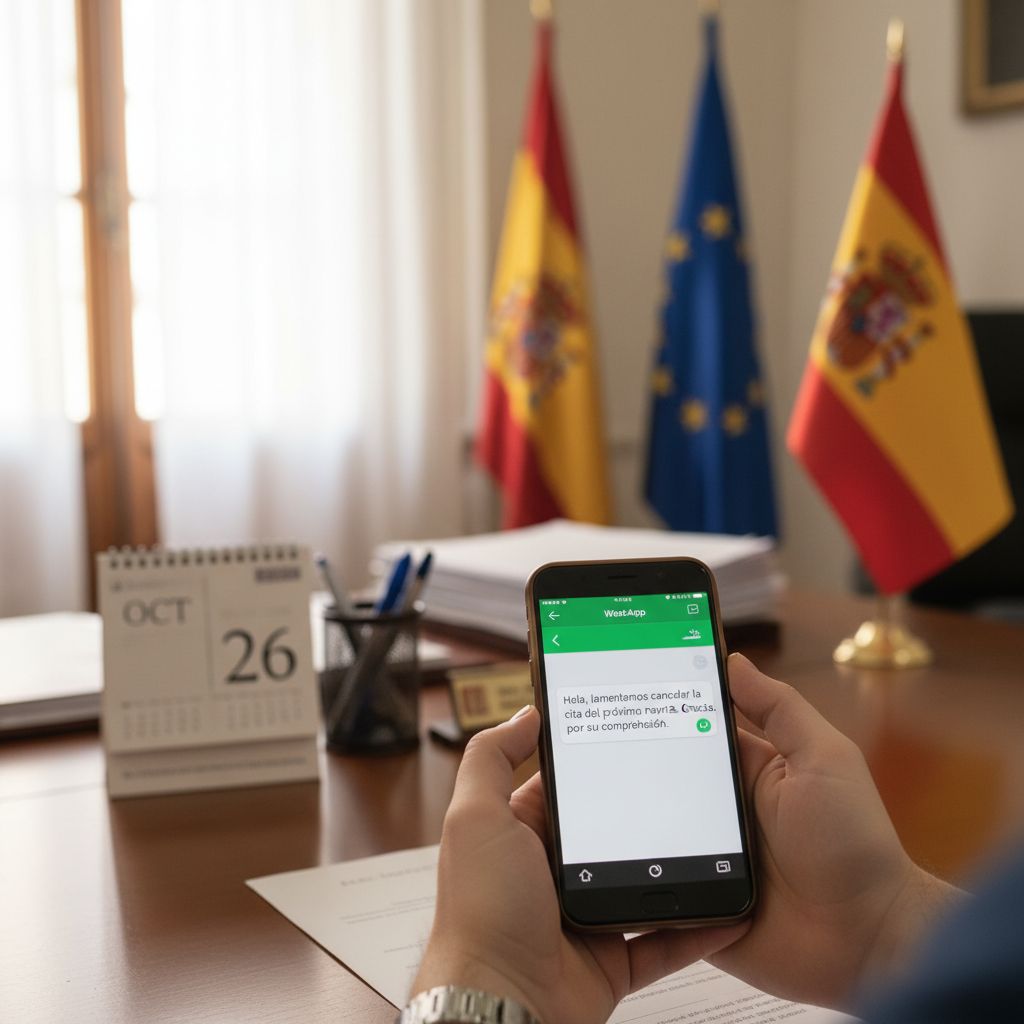
Cancelar o cambiar una cita por escrito (A2–B1)

Frases fijas para cancelar o cambiar una cita por email o WhatsApp.
DannisDannis
2 min reading time
(Illustration)

WhatsApp (semiformal): Hola, buenas. Soy [Nombre]. Disculpe, necesito cancelar mi cita del lunes 12 de febrero a las 9:30. Lamento las molestias.

Reprogramar: ¿Sería posible cambiarla al miércoles 14 por la mañana? Gracias. (Here la refers to la cita, “the appointment”.)

Email (formal): Estimado/a señor/a: Me dirijo a usted para cancelar mi cita del 12/02 a las 9:30. Lamento las molestias. Atentamente, [Nombre].

Proponer nueva fecha: ¿Sería posible cambiarla al 14/02? Agradecería confirmación. Muchas gracias. (Using the conditional makes the request more polite.)

Fechas y horas: el 12 de febrero; a las 9:30. En mensajes, también 12/02 y 9:30. Siempre: el + fecha; a + hora. (In English: “on 12 February at 9:30”.)

Cortesía útil: ¿Podría confirmarme la nueva hora? / ¿Le importaría cambiar la cita? / Me temo que no podré asistir.

Registro: En administración usa usted; en WhatsApp con academia/gestoría, tono semiformal. Si te dicen “tutéame”, pasa a tú.

Modelos reales: “Disculpe, necesito cancelar mi cita…” y “Lamento las molestias” son fórmulas habituales en trámites.

Tip pronombre: cambiarla = cambiar la cita; confirmarla = confirmar la cita. (La agrees with the feminine noun cita.)

Comprehension check:

Elige la opción más cortés para proponer nueva fecha.
¿Sería posible cambiarla al miércoles 14?
Cámbieme la cita al 14.
Cambia la cita al 14, porfa.
The conditional forms (“sería posible”, “podría”) soften the request — this is a neutral, polite tone for dealing with administration. The imperative (“Cámbieme…”) sounds too direct, and “porfa” plus tuteo are not appropriate in a formal register. See the uses of the conditional for polite requests.
Look for the option with the conditional: sería / podría.
Completa: Nos vemos el 12 de febrero ___ las 9:30.
a
en
de
In Spanish, time is introduced with the preposition “a”: a las 9:30. For dates you use the article “el”: el 12 de febrero. This is the standard pattern for messages and emails.
Date with “el”, time with “a”.
Para un email a extranjería, ¿qué cierre es adecuado?
Atentamente,
Besos,
Un abrazo,
In administrative emails you use a formal register: greeting “Estimado/a…” and closing “Atentamente”. “Besos” / “Un abrazo” are too informal. For more on using tú / usted and register in official contexts, see the guide.
Think of a formal email or letter closing.

Discover next:

Join Action Section
Do you like it? Want more?
Free & quick registration, no subscriptions!
🤗
For expats and alike – unlike any other language app you've tried!
🎮
Learn by scrolling and playing!
💪
Real grammar and idioms to sound like locals!
🧠
Endless FYP feed for language learning
🧠
Endless FYP feed for language learning

Related articles

Materials on related topics will help expand your understanding of the topics: